

Read this if you…
- want the source of "sour grapes," "boy who cried wolf," "slow and steady wins the race" etc.
- like very short pieces — a fable a night, takes a couple minutes
- love parables using animals who can talk
- like clean simple morals
Skip this if you…
- want character development
- want plot
- want details
The  Take
Take
Just an awesome genre of storytelling that the ancient world embraced.
The lineage through Aesop’s Fables
- Theogony/Works and Days by Hesiod. Aesop’s Fables built on it. - The fable was already old when the Aesopic collection took it up — and Hesiod has the oldest one - His hawk and nightingale in *Works and Days* is the earliest recorded Greek fable; the Aesopic "Hawk, Nightingale and Birdcatcher" is a direct retelling - Read Hesiod first and you see the genre being invented — the same beasts, the same blunt lesson about who holds the power
- Phaedo by Plato. Aesop’s Fables shaped it. - The fables follow Socrates into his death cell — in the *Phaedo* he spends his last days turning Aesop into verse - Plato names Aesop directly and improvises in his manner: a new fable about pleasure and pain joined at the head, inseparable - The humble animal tale earns a place in philosophy's most solemn scene
Depicted in Art
A fox leaps up beneath a grape arbor, jaws snapping inches short of the dangling cluster.
Milo Winter, 1919
The tortoise crossing the finish ribbon while the hare bolts awake too late in the foreground grass.
Milo Winter, 1919
A personified North Wind blows down on a traveler who clutches his cloak tighter against the gale.
Milo Winter, 1919
Two mice at a richly laid table in a grand interior, fleeing as a cat or human disturbance arrives.
Wenceslaus Hollar, 1665
A tiny mouse gnaws the rope net binding a recumbent lion who watches calmly.
Milo Winter, 1919
A wolf and a lamb meeting at the bank of a forest stream, the lamb caught mid-drink as the wolf advances.
Jean-Baptiste Oudry
A crow perched on the rim of a tall narrow pitcher, dropping pebbles inside to raise the water level.
Milo Winter, 1919
A shepherd boy waves his arms in panic on a hillside while villagers below ignore him and a wolf approaches the flock.
Milo Winter, 1919
Two mice at a country table of plain grain, the visiting town mouse looking unimpressed.
Milo Winter, 1919
A fox in a sunlit vineyard staring up at a high cluster of grapes he cannot reach.
Walter Hunt, 1890
A wolf accosting a lamb at a streambank, the lamb shrinking back while the wolf invents pretexts.
Wenceslaus Hollar, 1665
A crow perched on a branch with cheese in its beak as a fox below looks up flattering it to sing.
Wenceslaus Hollar, 1665
Recommended Editions

Robert Temple
Penguin Classics · 1998
Temple's Penguin is the greatest-hits selection, with short intros that locate each fable in its world. Enough to know Aesop without committing to the full archive.
Please support us by purchasing through these links, at no extra cost to you!
Notable Quotes
Slow and steady wins the race.
Screen & Stage
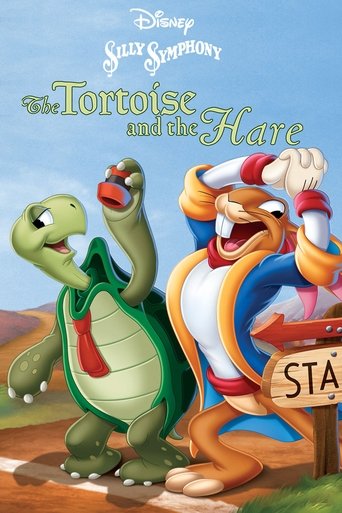
The Tortoise and the Hare
Film · 1935
Wilfred Jackson
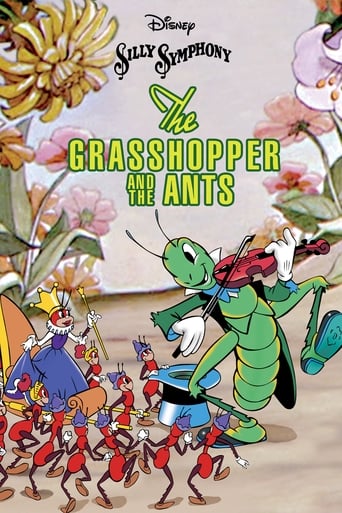
The Grasshopper and the Ants
Film · 1934
Wilfred Jackson
Posters via The Movie Database (TMDB)
- Abraham Lincoln, 16th U.S. President, 1809–1865: "He kept the Bible and Aesop's always within reach, and read them over and over again."
- John Locke, English philosopher, 1632–1704: "Stories apt to delight and entertain a child, may yet afford useful reflections to a grown man."
- G. K. Chesterton, English writer and critic, 1874–1936: "There is only one moral to the fable; because there is only one moral to everything."
- Jean de La Fontaine, French fabulist, 1621–1695: "I sing the heroes of old Aesop's line, / Whose tale, though false when strictly we define, / Containeth truths it were not ill to teach."
- Socrates, philosopher, c. 470–399 BCE: In prison awaiting the hemlock, he spent his final days turning the Aesop's fables he knew by heart into verse.