
Read this if you…
- want the strangest opening in the prophets: God tells Hosea to marry a prostitute as a living metaphor
- like the marriage-as-covenant theme — God as the cuckolded husband, Israel as the unfaithful wife
- care about a prophet whose personal life is the prophecy, his agony mirroring divine heartbreak
Skip this if you…
- don't want to read explicitly religious/Christian texts
Depicted in Art
Hosea stands paired with the Delphic Sibyl, each holding a scroll, against a deep blue ground.
Pinturicchio, 1493
Hosea stands robed in red and blue, holding an unfurled prophetic scroll, set into the predella of the Maesta altarpiece.
Duccio di Buoninsegna, 1311
A standing crowned prophet figure rendered in luminous red, blue, and yellow glass, scroll in hand.
1135
A gold-ground mosaic Hosea stands in the Dome of Immanuel, scroll in hand among the Old Testament prophets surrounding Christ.
1180
A mosaic Hosea stands within an arcade band of Old Testament prophets on the Baptistery dome.
1300
A life-size soapstone Hosea stands on the staircase parapet, robe swirling, scroll unfurled toward heaven.
Aleijadinho, 1805
An initial encloses Hosea and Gomer below the face of God, illustrating the prophet's commanded marriage.
1220
Recommended Editions

King James Version
Oxford University Press · 1611
The most influential and commonly quoted translation in English. The prose rhythm everyone else is responding to, even modern translations.
Please support us by purchasing through these links, at no extra cost to you!
Notable Quotes
For they have sown the wind, and they shall reap the whirlwind.
Screen & Stage
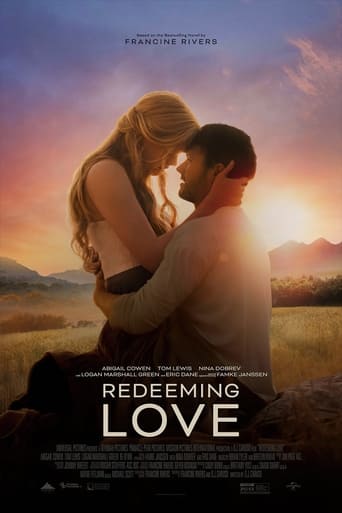

Posters via The Movie Database (TMDB)
- Jesus of Nazareth, founder of Christianity, c. 4 BCE – c. 30 CE: "But go ye and learn what that meaneth, I will have mercy, and not sacrifice."
- St. Augustine of Hippo, theologian, Bishop of Hippo, 354–430: "The prophet Hosea speaks so very profoundly that it is laborious work to penetrate his meaning."
- St. Jerome, early Church Father, Vulgate translator, c. 347–420: "Hosea is composed of short clauses and speaking as though by aphorisms."
- George Adam Smith, Old Testament scholar & expositor, 1856–1942: "Amos and Hosea were the first of all prophecy—rising cliff-like, with a sheer and magnificent originality."
- Apostle Paul, apostle, New Testament author, c. 5 – c. 65 CE: "I will call them my people, which were not my people; and her beloved, which was not beloved."