
Read this if you…
- are a sci-fi nerd and want an easy page turner
Skip this if you…
- want something serious
- don't care about science/sci fi
- aren't a nerd
The  Take
Take
Very easy read, constant action, very little fluff and philosophizing. Tons of scientific data to make the sci fi seem more scientific. Fun read, will 100% read 20000 leagues under the sea and around the world in 80 days. Also feels like back to the future and Rick and Morty inspired by the liedenbrock/axel relationship. Also just great imagination of the living world WITHIN the earth. Fun
The lineage through Journey to the Center of the Earth
- The Aeneid by Virgil. Journey to the Center of the Earth built on it. - The ancient template behind the modern adventure — Verne consciously stages his descent on Aeneas's journey to the underworld - The novel stitches Virgil straight into the text, quoting the *Aeneid* in Latin and naming the hero's passage among the dead - Read it first and the trip to the planet's core reveals itself as a katabasis — the mythic descent dressed in nineteenth-century science
- The Divine Comedy by Dante Alighieri. Journey to the Center of the Earth built on it. - Critics single out Dante's *Inferno* as Verne's deepest model — the literal descent toward the planet's center is the *Inferno*'s spiral recast as geology - Axel's journey down and back is a Dantean katabasis in disguise; the medieval underworld supplies the shape, science supplies the trappings - Read the *Inferno* first and the descent reads as more than adventure — it's the oldest pattern in the Western imagination dressed in Verne's machinery
Depicted in Art
From their raft on the Lidenbrock Sea, the explorers watch a giant ichthyosaur and plesiosaur tear each other apart in a frothing battle.
Édouard Riou, 1864
A vast geyser jets up from a rocky island in the underground sea as the explorers' raft drifts past in awe.
Édouard Riou, 1864
The travelers stand at the smoking summit of Stromboli volcano in Italy, ejected by the eruption that ended their journey.
Édouard Riou, 1864
The explorers' raft is hurled upward on a churning column of magma as the volcanic eruption begins to expel them from the earth.
Édouard Riou, 1864
Axel emerges from the tunnels to behold the Lidenbrock Sea — a vast underground ocean lit by a luminous vault.
Édouard Riou, 1864
The explorers gaze out over a vast prehistoric graveyard strewn with skulls and skeletons of extinct beasts on the far shore.
Édouard Riou, 1864
The explorers walk through a forest of giant prehistoric mushrooms taller than men on the shore of the underground sea.
Édouard Riou, 1864
Recommended Editions

William Butcher
Oxford University Press · 2008
Butcher spent his career proving that Verne in English had been quietly mangled for a century, and this Oxford edition is the cleanest cut. The science is correct, the jokes land, the prose is sharper than the kid-book reputation suggests.
Please support us by purchasing through these links, at no extra cost to you!
Notable Quotes
Descend, bold traveller, into the crater of the jökull of Snæfells, which the shadow of Scartaris touches before the Kalends of July, and you will attain the centre of the earth.
Screen & Stage
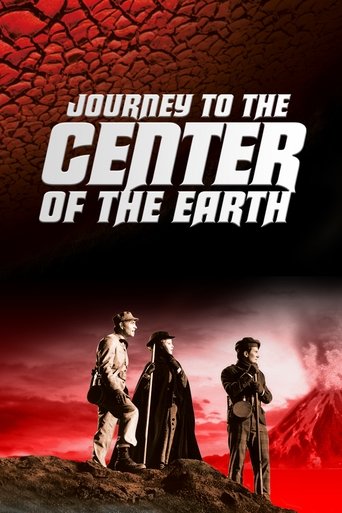
Journey to the Center of the Earth
Film · 1959
Henry Levin
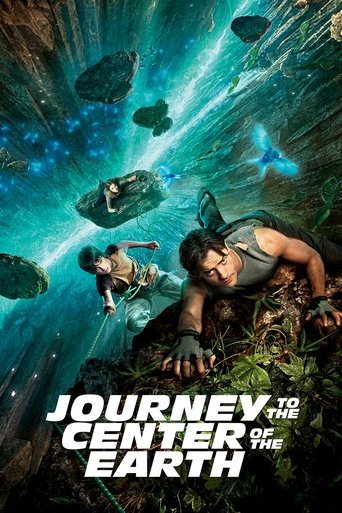 loose
looseJourney to the Center of the Earth
Film · 2008
Eric Brevig
Posters via The Movie Database (TMDB)
- Bear Grylls, British adventurer and television survival presenter, 1974-: Wrote the Introduction to the 2012 Signet Classics edition, treating Verne's underground voyage as bodily, danger-facing adventure.
- Arthur Conan Doyle, British novelist, 1859–1930: Taught himself French on Verne and drew on Journey to the Center of the Earth for The Lost World.
- Leonard Nimoy, American actor, 1931-2015: Wrote the Afterword to the 2012 Signet Classics edition, tying Verne's subterranean voyage to the science-fiction imagination.
- Ray Bradbury, American science-fiction novelist, 1920–2012: "We are all, in one way or another, the children of Jules Verne."

More by Jules Verne
- 107Twenty Thousand Leagues Under the Sea1870Jules VerneBreezy·Long·440 pagesInfluence4Popularity78The Age of the NovelScience FictionFrench
- 131Around the World in Eighty Days1872Jules VerneBreezy·Short·248 pagesInfluence4Popularity75The Age of the NovelAdventureFrench
- 160Journey to the Center of the Earth1864Jules VerneBreezy·Short·234 pagesInfluence3Popularity74The Age of the NovelScience FictionFrench
- 107Twenty Thousand Leagues Under the SeaJules Verne1870The Age of the NovelBreezyLong440478Science FictionFrench
- 131Around the World in Eighty DaysJules Verne1872The Age of the NovelBreezyShort248475AdventureFrench
- 160Journey to the Center of the EarthJules Verne1864The Age of the NovelBreezyShort234374Science FictionFrench