

Read this if you…
- love Portugal for some reason
- just want to read a bunch of epic poems (this is not an all timer)
- think the Age of Exploration is cool
Skip this if you…
- aren't obsessed with Portugal/explorers
- haven't already read all the great epics
The  Take
Take
Very interesting odyssey/aeneid grafting on to the current events of explorer age (vasco de gama). Interesting mix of Christianity and Greek myth. Funny that he makes it seem Portugal was gonna take over the world. Would have been a huge poem if they did . Very anti Muslim but that kinda just what was happening in Portugal at the time Short easy read
The lineage through The Lusiads
- The Aeneid by Virgil. The Lusiads built on it. - *The Lusiads* is a Renaissance *Aeneid* — Camões took Virgil's structure of wandering-then-war and pointed it at a true voyage - The opening dedication bows to Virgil; the poem's whole ambition is to do for Portugal what Virgil did for Rome - Yet it's also a challenge: Camões names "Aeneas and his long journeying" only to declare da Gama outsailed him — read the *Aeneid* first and you feel the gauntlet thrown
- The Odyssey by Homer. The Lusiads built on it. - Da Gama's voyage to India, recast as a Homeric wandering across hostile seas - Camões modeled the *Lusiads* on the *Odyssey* — its episodic sea-journey structure, and an Isle of Love that lifts straight from Calypso's island and Alcinous's garden - Knowing Homer's voyage first, you see Camões turn one man's road home into an empire's road outward
- Metamorphoses by Ovid. The Lusiads built on it. - The poem's most unforgettable figure — Adamastor, the Titan turned into the rock of the Cape by a love he could not have — is built on Ovid's machinery of metamorphosis - Camões was as good a reader of the *Metamorphoses* as of Virgil; reading Ovid first shows you the tradition Adamastor competes with, body undone into landscape by frustrated desire
- The Iliad by Homer. The Lusiads built on it. - The model Camões declares up front — *The Lusiads* wears its Homeric (and Virgilian) inheritance on full display - The poem's whole divine apparatus, gods watching over the voyage and taking sides, descends straight from the *Iliad* - Know how Homer's Olympians meddle in mortal war and you see exactly what Camões is repurposing for the open sea
Depicted in Art
Inês de Castro on her knees begging for mercy as the king's emissaries stand over her with drawn blades.
Columbano Bordalo Pinheiro, 1904
The old man on the Restelo beach raising his voice in prophetic warning as Vasco da Gama's fleet departs Lisbon.
Columbano Bordalo Pinheiro, 1904
Inês collapsed before her assassins, children clinging to her, set against a dim palace interior.
Karl Bryullov, 1834
Da Gama, in armor, standing before the seated Zamorin of Calicut in a hall of attendants and elephants.
Veloso Salgado, 1898
Recommended Editions

Landeg White
Oxford University Press · 2008
White's verse keeps Camões moving. The Portuguese sea route to India in English meter that doesn't sag, and an intro that's good on the poem's role in Portuguese self-mythology.
Please support us by purchasing through these links, at no extra cost to you!
Notable Quotes
Arms and the Heroes, who from Lisbon's shore, Thro' seas where sail was never spread before, Beyond where Ceylon lifts her spicy breast, And waves her woods above the watery waste, With prowess more than human forc'd their way To the fair kingdoms of the rising day.
Screen & Stage
 loose
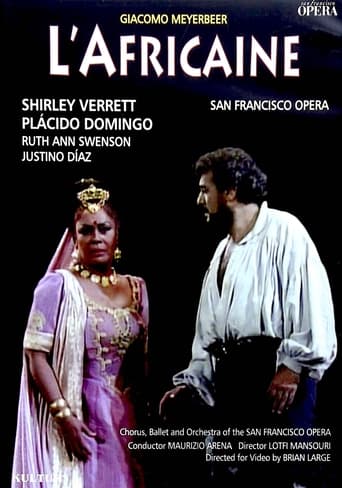
looseL'Africaine
Opera · 1865
Giacomo Meyerbeer
 loose
looseTaprobana
Film · 2014
Gabriel Abrantes
Posters via The Movie Database (TMDB)
- Philip II of Spain / Philip I of Portugal, king of Spain and Portugal, 1527-1598: After the 1580 union, Castilian translations of Os Lusíadas folded Camões into Habsburg imperial prestige.
- Voltaire, French Enlightenment philosopher and poet, 1694–1778: "A sort of epic poetry unheard of before."
- Montesquieu, French Enlightenment philosopher, 1689–1755: "Camoens's poem has something of the charm of the Odyssey and of the magnificence of the Aeneid."
- Herman Melville, American novelist, author of 'Moby-Dick', 1819–1891: "The Lusiad! It's the man-of-war epic of the world, my lad."
- King Sebastião I of Portugal, king of Portugal, 1554-1578: Camões dedicated Os Lusíadas to the young king, whose favor won him a modest royal pension.