
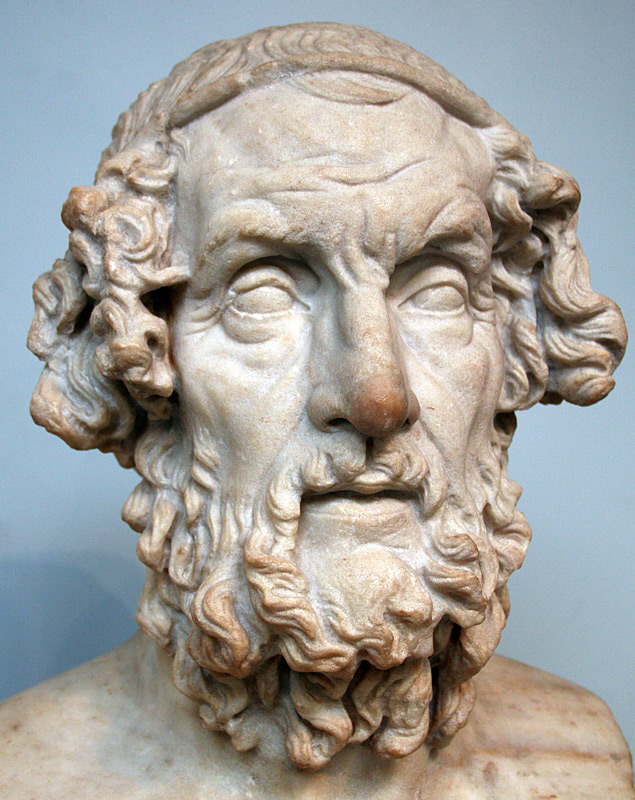
Read this if you…
- want context for pretty much the rest of Western Literature
- like seafaring adventures (He just needs to get home!)
- care about the history of Humans view of mythological/religious afterlife
- prefer cunning heroes over strongmen
Skip this if you…
- don't care about historical significance
- are expecting plot to move like modern books
The  Take
Take
The great ancient work of the western canon for a reason. In medias res awesome tactic. Odysseus is a great main character being a great fighter, but more known for his wiles and words. The trials are great, and the final murder of the suitors is great. Ending with laertes and Telemachus together is great. The dog recognizing him is great little bit. Emphasis on hospitality is interesting for a book so old. Journey to underworld is awesome storytelling. I hear it was the model for afterlife that Dante took which formed the modern concept
The lineage through The Odyssey
- The Epic of Gilgamesh by Anonymous. The Odyssey built on it. - Odysseus's strangest episodes echo a far older story: scholars (M.L. West et al.) read Circe behind Gilgamesh's ale-wife Siduri, Alcinous behind the flood-survivor Utnapishtim, the Nekyia behind Gilgamesh's descent to the dead - The proposed route is Near-Eastern transmission — Phoenician contact, a lost Heracles poem — carrying these shapes from Mesopotamia to Greece - Reading *Gilgamesh* first makes the *Odyssey* feel less like an origin and more like a late, brilliant heir to a much older quest for the world's edge
- The Aeneid by Virgil. The Odyssey shaped it. - Aeneas sails the same seas as Odysseus — the *Aeneid*'s first six books recreate the *Odyssey*'s wandering structure - Book III deliberately replays the *Odyssey*'s perils, sending its hero past the same coasts and dangers - Virgil synthesized both Homeric poems into one: a wandering half built on the *Odyssey*, a war half on the *Iliad*
- Poetics by Aristotle. The Odyssey shaped it. - Aristotle's working model for what a well-built epic looks like - In the *Poetics*, the *Odyssey* is the case study — its single unified action (Aristotle praises Homer for leaving out Odysseus' wound on Parnassus, his feigned madness, anything that doesn't drive the homecoming) is the textbook example of a plot done right - The scar-in-the-bath recognition becomes Aristotle's specimen of *anagnorisis* — the moment of knowing he'd build his whole theory of reversal and recognition around
- Phaedo by Plato. The Odyssey shaped it. - A single Homeric line becomes a philosophical proof - Plato has Socrates quote Odysseus *smiting his breast and rebuking his heart* (Odyssey 20.17–18) on his deathbed - The moment Odysseus masters his own anger is, for Plato, evidence that the soul rules the body rather than merely tuning it
- The Satyricon by Petronius. The Odyssey shaped it. - Petronius drags the *Odyssey* through the gutter — and it's the funnier for knowing the original - Encolpius wanders Italy dogged by the wrath of Priapus, a low-rent stand-in for Poseidon's wrath at Odysseus - He even runs into his own Circe — a temptress, no enchantress; the *Satyricon* is the epic remade as sexual farce
- The Republic by Plato. The Odyssey shaped it. - Plato can't stop quoting Homer even as he tries to throw him out - The *Republic*'s closing Myth of Er puns on Homer and hands Odysseus the choice of his next life (620a–d); Glaucon's piggish "city for pigs" echoes Circe's swine - And in Book 10, when Plato banishes the poets, it's the *Odyssey* he's aiming at — Achilles' ghost saying he'd rather be a living slave than a dead king is exactly the line he says would make his guardians afraid to die
- The Oresteia by Aeschylus. The Odyssey shaped it. - The story Homer keeps telling on the side becomes Aeschylus's whole trilogy - Throughout the *Odyssey* — Nestor in Book 3, Menelaus in Book 4, Agamemnon's own shade in Books 11 and 24 — the murder of Agamemnon is the cautionary foil to Odysseus's safe homecoming - Aeschylus took that recurring moral paradigm and built the *Oresteia* on it, reworking Homer's frame for the tragic stage
- The Lusiads by Luís de Camões. The Odyssey shaped it. - Camões took Odysseus's wandering and pointed it at the real ocean - The hard slog up the African coast gave him room to imitate the *Odyssey*'s episodic voyage; the Isle of Love openly recalls Calypso's island and the garden of Alcinous - Homer's homecoming-by-sea becomes a nation's outbound voyage to India — same hostile waters, same gods meddling, new destination
- The History of Tom Jones, a Foundling by Henry Fielding. The Odyssey shaped it. - Fielding called his new form a 'comic epic poem in prose' and invoked Homer by name to do it — the *Odyssey* is the model he's working from - Tom becomes a modern, comic Odysseus: a wandering hero on a journey home, his adventures stretched across an 18-book epic frame - That 18-book structure runs back through Fénelon's *Télémaque*, itself a prose continuation of the *Odyssey* — Homer's architecture, two reroutings later
- The Histories by Herodotus. The Odyssey shaped it. - Herodotus is the most Homeric of the historians — antiquity said so (Longinus, Dionysius), and he names and echoes Homer throughout - The *Odyssey*'s wandering-and-inquiry mode — a man crossing strange lands, gathering what he sees — becomes the template for Herodotus's ethnographic digressions - He even argues with Homer: in his Helen-in-Egypt investigation, he marshals lines from the *Odyssey* as documentary evidence
- Metamorphoses by Ovid. The Odyssey shaped it. - Ovid mines the *Odyssey* for his metamorphosis myths — Circe, Polyphemus, Scylla all return, with verbal parallels close enough that scholars track them line by line - But he refracts them: the voyage gets retold from the vantage of Ulysses' forgotten crewmen, the men Homer left behind - Even his opening 'mutatas formas' — changed shapes — winks at Odysseus, the man 'of many turns'
- Ajax by Sophocles. The Odyssey shaped it. - Book 11's journey among the dead holds the seed of Sophocles' whole play — the silent shade of Ajax, still seething over Achilles' armor, refusing to speak to Odysseus - Homer's is the earliest surviving account of the Judgment of Arms, the grievance *Ajax* dramatizes - That one wordless encounter in the underworld becomes the full tragedy of a hero undone by a lost prize
- Oedipus Rex by Sophocles. The Odyssey shaped it. - The earliest surviving telling of the Oedipus myth is buried in the *Odyssey* — Book 11, where Odysseus meets Epicaste (Jocasta) among the dead - Homer also fixes the seer Tiresias here, in the same underworld descent — the prophet Sophocles will build his tragedy around - The myth-kernel was Homer's; Sophocles reshaped it into a drama of self-discovery
- The Nicomachean Ethics by Aristotle. The Odyssey shaped it. - Aristotle reaches for the *Odyssey* to teach ethics — quoting the helmsman's line, "Steer the ship clear of yonder spray and surge," to explain the doctrine of the mean - Odysseus choosing the lesser hazard between Scylla and Charybdis becomes the rule for choosing the lesser of two vices - Homer's seamanship, recast as moral navigation
- Paradise Lost by John Milton. The Odyssey shaped it. - Alongside the *Iliad*, the *Odyssey* handed Milton the epic blueprint — the invocation of the Muse that opens the poem, the elevated style, the wandering quest - Satan's long journey through Chaos echoes the Odyssean voyage; Milton draws his imagery openly from both Homeric epics - Homer's pagan machinery, repurposed for a Christian story
- Women of Trachis by Sophocles. The Odyssey shaped it. - A dark corner of the *Odyssey* becomes the engine of a tragedy: the lines (21.22–30) where Heracles murders his own guest Iphitus - Sophocles takes that epic crime as the buried fault line beneath the *Women of Trachis* - He counts on you knowing the Homeric version — the irony of the play sharpens against the poem standing behind it
- Electra by Sophocles. The Odyssey shaped it. - The Orestes story runs through the *Odyssey* as a constant moral exemplum — the avenging son held up to Telemachus as the model he should follow - That myth-kernel — vengeance for a murdered father — is what Sophocles stages in *Electra* - Of all the surviving versions, Sophocles stays closest to the Homeric shape of the tale
- Philoctetes by Sophocles. The Odyssey shaped it. - The scheming Odysseus who drives *Philoctetes* is the *polytropos* trickster of this poem, transplanted onto the tragic stage - Sophocles takes the man of many turns and darkens him — the cunning that wins admiration here becomes an instrumental deception that curdles - The play stages a contest between Odyssean guile and Achillean honesty, and the Odysseus ethos comes straight from the *Odyssey*
- Faust, Part Two by Johann Wolfgang von Goethe. The Odyssey shaped it. - Goethe's Homer was above all the *Odyssey* — in Sicily he found it suddenly "realistic" and began an unfinished *Nausikaa* drawn straight from it - That obsession surfaces in *Faust, Part Two*: Act III opens at Menelaus's Sparta, the same post-war kingdom where Helen reappears in Book 4 of the *Odyssey* - Faust's later descent after Helen's shade rhymes with Homer's land of the dead — the *Odyssey* is the architecture Goethe is building on
- Oedipus at Colonus by Sophocles. The Odyssey shaped it. - The underworld of Book XI seeds Sophocles' tragedy — among the dead Odysseus meets the prophet Teiresias and glimpses Epicaste, the mother who married her son - An ancient *Life* called Sophocles "the pupil of Homer"; the blind seer and the doomed house of Thebes both reach him through this poem - The memory the audience already carried — Oedipus, Teiresias, prophecy from the grave — is the raw material *Oedipus at Colonus* transforms
Depicted in Art
The Return of Odysseus (Homage to Pinturicchio and Benin)
Romare Howard Bearden, 1977
On the neck of a massive Proto-Attic funerary amphora, Odysseus and two companions drive a long sharpened stake into the single eye of the reclining cyclops Polyphemus.
Odysseus's ship sails away in golden dawn light as the blinded giant Polyphemus, dimly outlined on a high cliff, hurls rocks toward the fleet.
J. M. W. Turner, 1829
Odysseus, lashed to the mast, strains against his bonds as winged bird-bodied Sirens swoop around the ship; his oarsmen row on, ears plugged with wax.
John William Waterhouse, 1891
Athena stands beside the newly landed Odysseus on a rocky shore, lifting the mist with a gesture to reveal the hills of Ithaca behind them.
Giuseppe Bottani, 1775
The Greek crew rows desperately through churning waves as the towering blinded Polyphemus rears up on a shoreline cliff, lifting a massive boulder to hurl after them.
Arnold Böcklin, 1896
The shipwrecked, half-naked Odysseus emerges from the bushes; Nausicaa and her maidens, washing clothes by the river, recoil and gesture in surprise.
Jacob Jordaens, 1635
Three nude Sirens climb dripping out of the sea onto Odysseus's deck; the bound hero arches his back toward them while his crew rows obliviously.
Herbert James Draper, 1909
Penelope sits at her loom in a Renaissance interior while suitors stand around her; in the doorway behind, Odysseus enters in pilgrim's garb, his bow on the wall.
Pinturicchio, 1509
Three nude Sirens on a beach littered with the bones of past victims sing toward Odysseus's distant ship; the bound hero leans toward their music.
William Etty, 1837
Odysseus in dark robes stands at the edge of a sea cliff staring out toward the horizon; behind him the nude Calypso sits on her rocky island, lyre in hand.
Arnold Böcklin, 1882
Enthroned Circe extends her enchanted goblet straight at the viewer; behind her, a small mirror reflects Odysseus approaching with drawn sword as a pig roots at her feet.
John William Waterhouse, 1891
Recommended Editions

Robert Fagles
Penguin Classics · 1996
Fagles again, and the voice carries from his Iliad. Muscular lines, fast scenes, Calypso and the Cyclops and the bow all play. Easiest first Odyssey in English, and pairs cleanly if you read his Iliad too.
Please support us by purchasing through these links, at no extra cost to you!
Notable Quotes
Sing to me of the man, Muse, the man of twists and turns driven time and again off course, once he had plundered the hallowed heights of Troy.
Screen & Stage
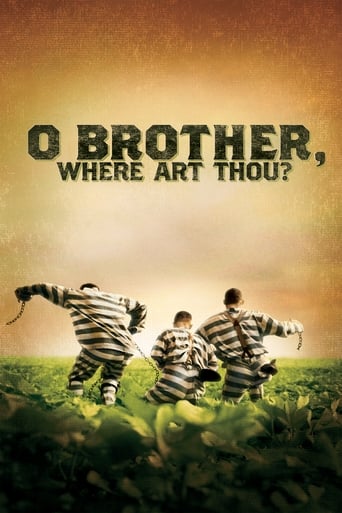

Posters via The Movie Database (TMDB)
- Jay-Z, rapper, record executive, 1969–: "This epic poem was kind of difficult for me to get through, but it has a beautiful rhythm."
- James Joyce, Irish modernist novelist, 1882–1941: "He is the most complete man in literature."
- Alexander Pope, English poet & translator of Homer, 1688–1744: "Homer is universally allowed to have had the greatest invention of any writer whatever."
- T. S. Eliot, Anglo-American poet & critic, Nobel laureate, 1888–1965: "Joyce's use of the Odyssey has the importance of a scientific discovery."
- Bob Dylan, American singer-songwriter, Nobel laureate in Literature, b. 1941: "A strange, adventurous tale of a grown man trying to get home after fighting in a war."
- Thomas Jefferson, 3rd President of the United States, Founding Father, 1743–1826: "I enjoy Homer in his own language infinitely beyond Pope's translation of him; it is an innocent enjoyment."
- Napoleon Bonaparte, Emperor of the French, military commander, 1769–1821: "Every time that he read Homer it was with a new admiration."
- Friedrich Nietzsche, German philosopher, 1844–1900: "No longer guided and protected by Homer's hand, we step backwards into the pre-Homeric world — only night and horror."
- Harold Bloom, American literary critic, 1930–2019: "Everyone who now reads and writes in the West … is still a son or daughter of Homer."
- T. E. Lawrence, soldier, writer & translator, 1888–1935: "The oldest book worth reading for its story and the first novel of Europe."