
Read this if you…
- love Revenge stories
- like more mood/poetry than plot
- interested in The Greek Conception of Fate
Skip this if you…
- want a faster modern-style plot (this is a brooding vibe)
The  Take
Take
Awesome trilogy about Orestes in the house of Atreus. The murder of Agamemnon rules, the revenge ruled, and the court scene ruled. Great stuff for being so old. Shorty and sweet
The lineage through The Oresteia
- The Odyssey by Homer. The Oresteia built on it. - The *Oresteia* dramatizes a myth the *Odyssey* can't stop retelling — the failed homecoming that haunts Odysseus's successful one - Aeschylus keeps Homer's frame but shifts the weight: in the *Odyssey* the killer is Aegisthus, here the murder belongs to Clytemnestra - Reading the *Odyssey* first shows you the version Aeschylus is answering — and how much darker he makes it
- The Iliad by Homer. The Oresteia built on it. - The *Oresteia* is draped in Homer — Aeschylus reached back to the *Iliad* for his characterization and his ethical seriousness - You'll hear it in the similes and the heroic register; the house of Atreus is folded into a tragic frame built from epic material - The plot derives from the Agamemnon myth, but the *Iliad* is the deep well Aeschylus is drawing from
- Electra by Sophocles. The Oresteia shaped it. - The matricide Sophocles couldn't leave alone - Aeschylus' middle play, the *Libation Bearers*, set the scene — Orestes and Electra meet at their father's tomb, the recognition, the killing of their mother — and *Electra* reworks it beat for beat - Where Aeschylus made it Orestes' story, Sophocles answers by handing the whole drama to Electra
- The Frogs by Aristophanes. The Oresteia shaped it. - Aristophanes loved the *Oresteia* enough to put Aeschylus himself onstage to defend it - In the underworld contest, Euripides picks apart an Aeschylean prologue line by line — the Hermes lines from the *Oresteia* — while Aeschylus answers for his own grandeur - The comedy's closing torchlit procession of the Eleusinian Initiates deliberately echoes the *Oresteia*'s own luminous finale
- Medea by Euripides. The Oresteia shaped it. - Euripides built Medea's revenge on Aeschylus's blueprint — the verbal echoes of the *Choephoroi* are specific enough to catch - Medea frames her killing as a 'sacrifice,' an echo of the *Agamemnon*; she stands over the corpses exactly as Clytemnestra stood over Agamemnon and Cassandra - The poisoned robe that kills is patterned on the entangling robe Clytemnestra used — Aeschylus's signature image, turned to a new horror
- Wasps by Aristophanes. The Oresteia shaped it. - The tragedy Aristophanes spent a whole comedy taking apart - *Wasps* rebuilds the *Eumenides* jury trial as a domestic farce — a dog hauled up for stealing cheese instead of Orestes on trial for matricide - The watchman's prologue of *Agamemnon* and the Furies' costume change after the verdict both reappear, deflated into slapstick — proof that within thirty years Aeschylus was canonical enough to parody
- The Republic by Plato. The Oresteia shaped it. - Plato names Aeschylus directly — and not to praise him - Book 2 of the *Republic* faults the *Oresteia*'s poet for endorsing a justice valued only for its reputation, the exact view Socrates sets out to demolish - And when Plato bars the tragedians from his ideal city, Aeschylus is named on the list of the exiled
Depicted in Art
Orestes flees with arms raised against three Furies who close around him in a torchlit dark.
Carl Rahl, 1852
Orestes at the Delphic omphalos surrounded by sleeping or stirring Furies, with Apollo and Athena attending.
-340
Naked Orestes flees forward in terror as a swarm of mask-faced Furies wielding torches and snakes presses behind him, the crowned figure of Clytemnestra standing in his path.
John Singer Sargent, 1921
Clytemnestra pauses with raised dagger at the curtained bed of the sleeping Agamemnon; Aegisthus presses in behind her urging her on.
Pierre-Narcisse Guérin, 1817
Electra stands grieving in dark robes at her father's tomb, head bowed, a water jar set beside her on the steps.
Frederic Leighton, 1869
Orestes kneels at the omphalos stone in Delphi clutching a sword; Apollo stands over him with laurel, the Furies sleep nearby.
-380
Multi-scene woodcut: Clytemnestra and Aegisthus stab Agamemnon in his bath at left; at right Orestes returns to kill them in turn.
1545
Terracotta relief: Orestes, Electra and Pylades grouped at Agamemnon's tomb column.
Agamemnon stands with covered head as Iphigenia is carried toward the altar; Artemis appears above with the substituting deer.
70
Orestes in armour grips Clytemnestra by the hair and raises his sword, the body of Aegisthus already collapsed at his feet.
Bernardino Mei, 1654
Recommended Editions

Robert Fagles
Penguin Classics · 1979
Fagles makes the trilogy thunder. The move from blood-vengeance in Agamemnon to the courtroom in Eumenides actually feels like a civilization being invented, and Stanford's intro is one of the sharper Penguin Classics essays.
Please support us by purchasing through these links, at no extra cost to you!
Notable Quotes
Zeus has led us on to know, the Helmsman lays it down as law that we must suffer, suffer into truth.
Screen & Stage

Posters via The Movie Database (TMDB)
- Robert F. Kennedy, US Senator, presidential candidate, 1925–1968: The night MLK was killed, Kennedy quoted Aeschylus from memory: “pain which cannot forget falls drop by drop upon the heart… until… comes wisdom through the awful grace of God.”
- Richard Wagner, German opera composer, 1813–1883: "Nothing could equal the sublime emotion with which the Agamemnon inspired me."
- Johann Wolfgang von Goethe, German poet, novelist & dramatist, 1749–1832: Goethe is reported to have called the Oresteia the masterpiece of masterpieces.
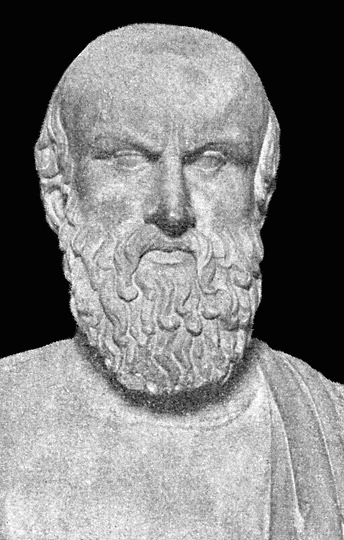
More by Aeschylus
- 53The Oresteia458 BCAeschylusGrueling·Short·286 pagesInfluence93Popularity50Ancient GreeceTragedyAncient Greek
- 143Prometheus Bound~460 BCAeschylusGrueling·Quick·64 pagesInfluence30Popularity8Ancient GreeceTragedyAncient Greek
- 157The Seven Against Thebes467 BCAeschylusGrueling·Quick·58 pagesInfluence26Popularity1Ancient GreeceTragedyAncient Greek
- 191The Persians472 BCAeschylusGrueling·Quick·57 pagesInfluence27Popularity1Ancient GreeceTragedyAncient Greek
- 195The Suppliants463 BCAeschylusGrueling·Quick·58 pagesInfluence26Popularity1Ancient GreeceTragedyAncient Greek