
Read this if you…
- want to Hear the greeks bragging about defeating Persians
- want to read the oldest surviving Greek play... and the only tragedy based on real events
- super short
Skip this if you…
- haven't already read Oresteia to see if you even like Aeschylus
- find greek choruses tedious (this one is heavy chorus)
- want plot
The  Take
Take
Very interesting to promote Athens, Aeschylus first major play is just the Persians talking about how badly they were rocked by Athens. Interesting Darius is played up as wise and xerxes a total fool. Also interesting to see how Athens loves their navy specifically
The lineage through The Persians
- The Iliad by Homer. The Persians built on it. - The source Aeschylus drank from — he called his tragedies "slices from the great banquets of Homer," and *The Persians* is one of those slices - The play dresses Xerxes and Darius in *Iliad* language, lending its Persian kings the "godlike hero" weight Homer gave Achilles and Hector - Read Homer first and the borrowed grandeur lands — you hear epic diction repurposed for the elegy of a routed empire
- The Frogs by Aristophanes. The Persians shaped it. - The tragedy Aeschylus is proudest of — and Aristophanes knew it - In *The Frogs*, the dead Aeschylus invokes *The Persians* as his civic masterpiece, the play that "taught Athens to yearn to beat the enemy" - Its great necromantic lament for King Darius ("O child of Darius, who is dead") becomes the very solemnity Aristophanes drags into the underworld to mock
Depicted in Art
Detail focusing on Xerxes on his throne at Mount Aigaleo, watching in fury as his fleet is destroyed below.
Wilhelm von Kaulbach, 1868
The Carian queen Artemisia on her ship loosing arrows at the pursuing Greek fleet, the two Ajaxes appearing in the clouds overhead.
Wilhelm von Kaulbach, 1868
Alternate view of the Donoghue figure of the young Sophocles singing the victory paean after the battle.
John Talbott Donoghue, 1889
Greek triremes break the Persian line in a tight neoclassical composition of grappling ships and falling combatants.
Jean-Jacques François Le Barbier, 1798
Themistocles directs the Greek fleet from a foreground trireme while Persian ships founder in a churning sea below the cliffs of Salamis.
Wilhelm von Kaulbach, 1868
Recommended Editions

David Grene
University of Chicago Press · 2013
Grene's version, from the Grene and Lattimore complete Greek tragedies, holds the play's strangest move steady: an Athenian audience watching their defeated enemy mourn, and being asked to feel it.
Please support us by purchasing through these links, at no extra cost to you!
Notable Quotes
On, sons of Greece! On, for your country's freedom! strike to save Wives, children, temples of ancestral gods, Graves of your fathers! now is all at stake.
Screen & Stage
 loose
looseThe Persians
Stage · 1993
Peter Sellars
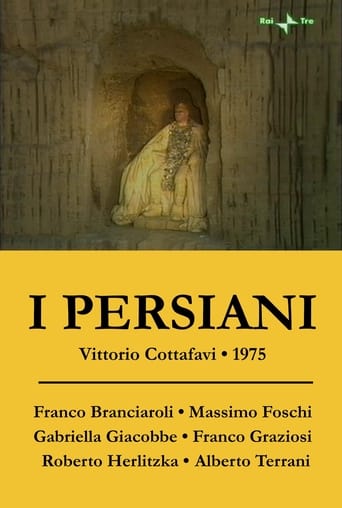
The Persians
TV · 1975
Vittorio Cottafavi
Posters via The Movie Database (TMDB)
- Aristophanes, Athenian comic playwright, c. 446–386 BCE: "The 'Persians' I wrote, in praise of the noblest deed that the world can show."
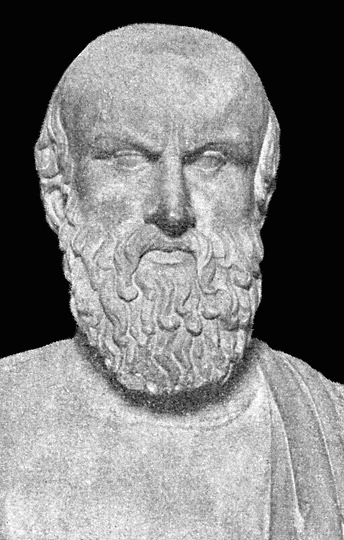
More by Aeschylus
- 53The Oresteia458 BCAeschylusGrueling·Short·286 pagesInfluence93Popularity50Ancient GreeceTragedyAncient Greek
- 143Prometheus Bound~460 BCAeschylusGrueling·Quick·64 pagesInfluence30Popularity8Ancient GreeceTragedyAncient Greek
- 157The Seven Against Thebes467 BCAeschylusGrueling·Quick·58 pagesInfluence26Popularity1Ancient GreeceTragedyAncient Greek
- 191The Persians472 BCAeschylusGrueling·Quick·57 pagesInfluence27Popularity1Ancient GreeceTragedyAncient Greek
- 195The Suppliants463 BCAeschylusGrueling·Quick·58 pagesInfluence26Popularity1Ancient GreeceTragedyAncient Greek