
The Origin of Species
 Charles Darwin1859
The most influential scientific book ever written.
Read this if you…
- want the most important book on science ever written
- want easily one of the most interesting scientific topics explored from multiple angles
Skip this if you…
- really don't even like hearing the guys argument suggesting evolution is true
- don't care for science writing
- don't want to think hard while reading
The  Take
Take
Awesome intuition and evidential rigor. Even without decent knowledge of genetics/dna and experimental evidence on the trickiest cases, Darwin reasons incredibly well, even when imperfectly. The “spirit” of the idea of evolution is awesome and just so explanatory with minimal evidence. The writing was quite clear and clinical
The lineage through The Origin of Species
- Tess of the D’Urbervilles by Thomas Hardy. The Origin of Species shaped it. - Hardy was, by his own account, "among the earliest acclaimers" of this book, and stood at Darwin's funeral in Westminster Abbey - *Tess* is the novel that takes Darwin's pitiless nature personally — heredity as fate, the strong surviving and the gentle crushed - The "ruthless Darwinian world" Hardy builds around his heroine is this book translated into a human tragedy
- The Brothers Karamazov by Fyodor Dostoevsky. The Origin of Species shaped it. - Darwin's struggle for existence echoes through Dostoevsky's last novel — he was conversant enough with the theory to concede 'man's descent from the ape' - Scholars trace the novel's 'viper will eat viper' imagery and the Grand Inquisitor's animal-versus-moral vision of man straight back to *Origin of Species* - The book that made man a competing organism is one of the things Dostoevsky's faith is wrestling with
- The Interpretation of Dreams by Sigmund Freud. The Origin of Species shaped it. - Darwin's *Origin* was one of the books that pulled the young Freud into science — he bought the German editions early and called "Darwin's doctrine, then in vogue," a powerful attraction - The move it teaches is the one Freud would carry into the mind: human beings are continuous with their animal past, driven by forces below the surface, not above it - *The Interpretation of Dreams* takes that frame and turns it inward, mapping the buried life of the psyche the way Darwin mapped the buried history of the species
Depicted in Art
A small ink branching tree drawn in Notebook B above the words 'I think'; lines fork from a common point with cross-bars marking living descendants.
Charles Darwin, 1837
The John Murray 1859 title page, naming the full title and Darwin as author, set in plain Victorian type.
1859
Darwin's bearded head grafted onto the crouching body of an ape, hand on chin in a pose of mock-philosophical reflection.
1871
Four Galápagos finch species shown in profile on perches, each with a noticeably different beak — heavy seed-cracker through slender warbler-like.
John Gould, 1845
A spiral procession rising out of chaos: earthworms morph into monkeys, then apes, then a caveman, then a top-hatted Victorian gentleman doffing his hat to a seated Darwin.
Edward Linley Sambourne, 1881
Recommended Editions

Penguin Classics
2009
Burrow's Penguin uses the 1859 first edition, which is the leanest version of Darwin's argument before he started adding defensive material to fend off critics. The text most modern scholars actually want.
Please support us by purchasing through these links, at no extra cost to you!
Notable Quotes
There is grandeur in this view of life, with its several powers, having been originally breathed into a few forms or into one; and that, whilst this planet has gone cycling on according to the fixed law of gravity, from so simple a beginning endless forms most beautiful and most wonderful have been, and are being, evolved.
Screen & Stage
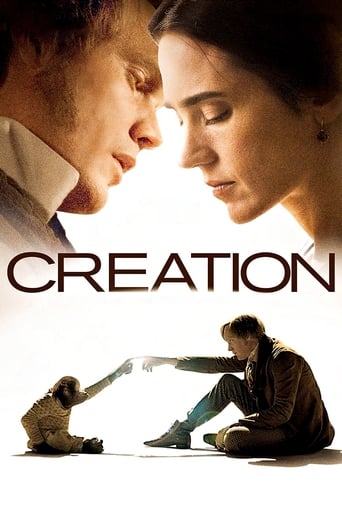 loose
looseCreation
Film · 2009
Jon Amiel
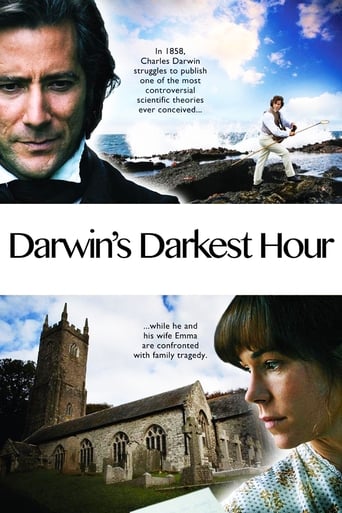 loose
looseDarwin's Darkest Hour
Film · 2009
John Bradshaw
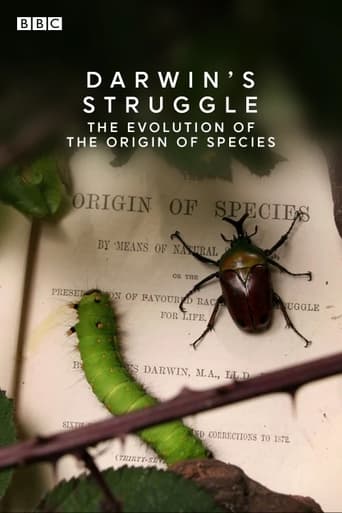 loose
looseDarwin's Struggle: The Evolution of the Origin of Species
Film · 2009
Nick Murphy
Posters via The Movie Database (TMDB)
- David Attenborough, naturalist, broadcaster, 1926–: "Think of any problem and before you start theorising, just check up whether Charles Darwin mentioned it in one of those green books sitting on your shelf."
- Daniel Dennett, philosopher, b. 1942: "If I were to give an award for the single best idea anyone has ever had, I'd give it to Darwin, ahead of Newton and Einstein and everyone else."
- Richard Dawkins, evolutionary biologist, b. 1941: "Darwin made it possible to be an intellectually fulfilled atheist."
- Neil deGrasse Tyson, astrophysicist, 1958–: "Named On the Origin of Species as a book everyone should read — 'to learn of our kinship with all other life on Earth.'"
- Charles Kingsley, Anglican priest and novelist, 1819–1875: "It is just as noble a conception of Deity to believe that He created primal forms capable of self-development."
- Karl Marx, philosopher and economist, 1818–1883: "This is the book that contains the natural-history foundation of our view point."
- Edward O. Wilson, biologist, founder of sociobiology, 1929–2021: "The most important book of science ever written."