

Read this if you…
- want to read Rome's greatest orator in his own words
- like writing that's tight, persuasive, and built to win arguments
- want the writer who basically taught Europe Latin for 1,500 years (Extremely popular in schools forever)
- like Stoicism and want someone stoic adjacent
Skip this if you…
- don't have any background on the political events of cicero's lifetime
- want stories (this is all speeches, letters, and essays basically)
The  Take
Take
Gotta be the best quick prose writer of the ancient bunch. Clearly very educated, he thought about a lot of stuff
The lineage through The Works of Cicero
- The Republic by Plato. The Works of Cicero built on it. - Cicero's *De Re Publica* is built on the *Republic* by design — he borrowed its title, its six books, and its dialogue form to write Rome's answer to Plato - The *Dream of Scipio* that crowns it is a direct remaking of the *Republic*'s Myth of Er, Plato's afterlife vision recast for a Roman statesman - Read Plato first and Cicero's frame snaps into focus — you can see exactly what he's adapting and what he changes to make it Roman
- Phaedrus by Plato. The Works of Cicero built on it. - *De Oratore* names its source out loud: a character points to "Socrates as he appears in the *Phaedrus* of Plato" and asks why they shouldn't do the same - Cicero even translated bits of the *Phaedrus* into Latin himself, citing them in his *Orator* - Read Plato first and the plane-tree staging, the leisurely setting, the whole shape of Cicero's rhetorical dialogues stops feeling like decoration and starts reading as homage
- The Nicomachean Ethics by Aristotle. The Works of Cicero built on it. - Cicero is in direct conversation with the *Nicomachean Ethics* — he names it, argues over its authorship, and engages its Peripatetic doctrine head-on - The *Ethics* is clearly reflected in *De Finibus*, especially Book II's treatment of virtue and the good - Read Aristotle first and you'll see Cicero translating Greek ethical theory into a Roman key — right down to framing *De Officiis* as advice to his own son
- The Divine Comedy by Dante Alighieri. The Works of Cicero shaped it. - Dante's whole map of Hell rests on one Ciceronian distinction - *De Officiis* splits injustice into force and fraud — "fraud the more hateful" — and Dante builds the lower circles of the *Inferno* on exactly that hierarchy (Canto 11) - Cicero is the moral philosopher behind the architecture: Dante read him alongside Boethius after Beatrice's death and quotes him at length in the *Convivio*
- The Prince by Niccolò Machiavelli. The Works of Cicero shaped it. - *The Prince* is Cicero's *De Officiis* with the moral signs reversed — Cicero is the shadow text Machiavelli writes against - Cicero used the fox and the lion to forbid the very deceit Machiavelli would later prescribe; the famous "be a fox and a lion" is a point-blank reply to *De Officiis* - Machiavelli's chapters on liberality and mercy engage Cicero's directly, then invert them — virtue that gets a prince killed isn't virtue
- The Complete Essays by Michel de Montaigne. The Works of Cicero shaped it. - Montaigne's chief philosophical quarry — he quotes and reworks Cicero throughout the *Essays* - His essay "That to study philosophy is to learn to die" lifts its title and whole argument straight from the *Tusculan Disputations*: that the philosopher's life is a rehearsal for death - Read Cicero here and you meet the voice Montaigne is forever turning over in his hands a millennium and a half later
- An Enquiry Concerning Human Understanding by David Hume. The Works of Cicero shaped it. - The model for the kind of philosophy Hume set out to write — elegant, addressed to common life, built to last - Hume devoured Cicero at Edinburgh and openly claimed his ancestry: in the *Enquiry*'s closing section he identifies his own mitigated skepticism with Cicero's Academic skepticism - The skeptical tradition that runs through the *Enquiry* has its Roman headwaters here
- The Consolation of Philosophy by Boethius. The Works of Cicero shaped it. - Boethius knew his Cicero cold — he wrote a full commentary on him, the *In Ciceronis Topica* - That intimacy feeds the *Consolation*: the turning wheel of Fortune and its parade of historical examples descend from Cicero's *De Officiis* and the *Dream of Scipio* - Cicero's *On Fate* is the partner Boethius is arguing with when the *Consolation* takes up divine foreknowledge against free will
- Letters from a Stoic by Seneca. The Works of Cicero shaped it. - Seneca names Cicero directly, citing the letters to Atticus in his own *Letters from a Stoic* - Cicero built the Latin vocabulary for Greek philosophy — and Seneca leans on it, borrowing his terms even where he disagrees - The philosophical letter as a form of moral instruction starts here, a century before Seneca
- The Annals of Imperial Rome by Publius Cornelius Tacitus. The Works of Cicero shaped it. - Cicero is the rhetorical bedrock Tacitus was trained on — his Quintilian-led education was avowedly Ciceronian, and his *Dialogus de Oratoribus* is openly modeled on *De Oratore*, *Brutus*, and *Orator* - But the *Annals* is also a swerve away: its clipped, jagged prose defines itself against Cicero's balanced period, reaching instead toward Sallust
Depicted in Art
A glowing Italian hillside landscape with Cicero's villa nestled in the Alban Hills, evoking the retreat where the Disputations were composed.
Joseph Mallord William Turner, 1839
Fulvia, mistress of the conspirator Curius, leans close to a seated Cicero in a private chamber, warning him of the plot.
Francesco Filippini, 1879
Tight crop on Catiline alone on his bench, scowling, abandoned by the senators around him as Cicero attacks.
Cesare Maccari, 1888
Three Roman exemplars stand in classicizing niches; Cicero on one side holds a scroll, robed as orator.
Domenico Ghirlandaio, 1485
Soldiers overtake Cicero in a litter on the road from Formiae; he extends his neck calmly as the executioner draws his sword.
François Perrier, 1635
A boy in a red doublet sits on a bench reading a book, name CICERO carved in the wood behind him.
Vincenzo Foppa, 1464
Cicero stands at the rostrum delivering the First Catilinarian, while Catiline sits isolated on a bench as the surrounding senators recoil from him.
Cesare Maccari, 1888
Recommended Editions

Michael Grant
Penguin Classics · 1971
Grant's Penguin selections are the readable way into Cicero. Speeches, essays, and letters together give a working portrait of the most consequential writer of the Republic in a single paperback.
Please support us by purchasing through these links, at no extra cost to you!
Notable Quotes
How long, O Catiline, will you abuse our patience?
Screen & Stage

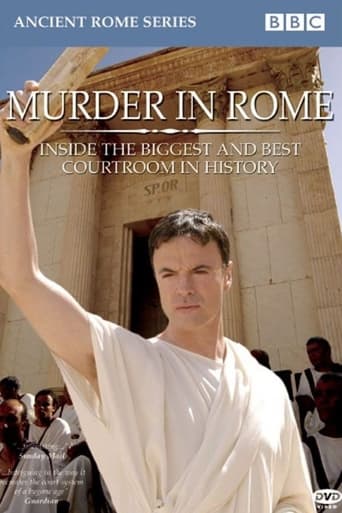
Posters via The Movie Database (TMDB)
- John Adams, U.S. Founding Father, 2nd President, 1735–1826: "All the ages of the world have not produced a greater statesman and philosopher united than Cicero."
- Voltaire, French Enlightenment philosopher, 1694–1778: "No one will ever write anything more wise, more true, or more useful."
- Augustine of Hippo, Church Father, theologian, 354–430 CE: "This book changed my affections, and turned my prayers to Yourself, O Lord."
- David Hume, Scottish Enlightenment philosopher, 1711–1776: "when compared with Demosthenes and Cicero, were eclipsed like a taper when set in the rays of a meridian sun."
- Frederick the Great, King of Prussia, 1712–1786: "The best work on morals that has been or can be written."
- Thomas Jefferson, U.S. Founding Father, 3rd President, 1743–1826: "They certainly breathe the purest effusions of an exalted patriot, while the parricide Caesar is left in odious contrast."