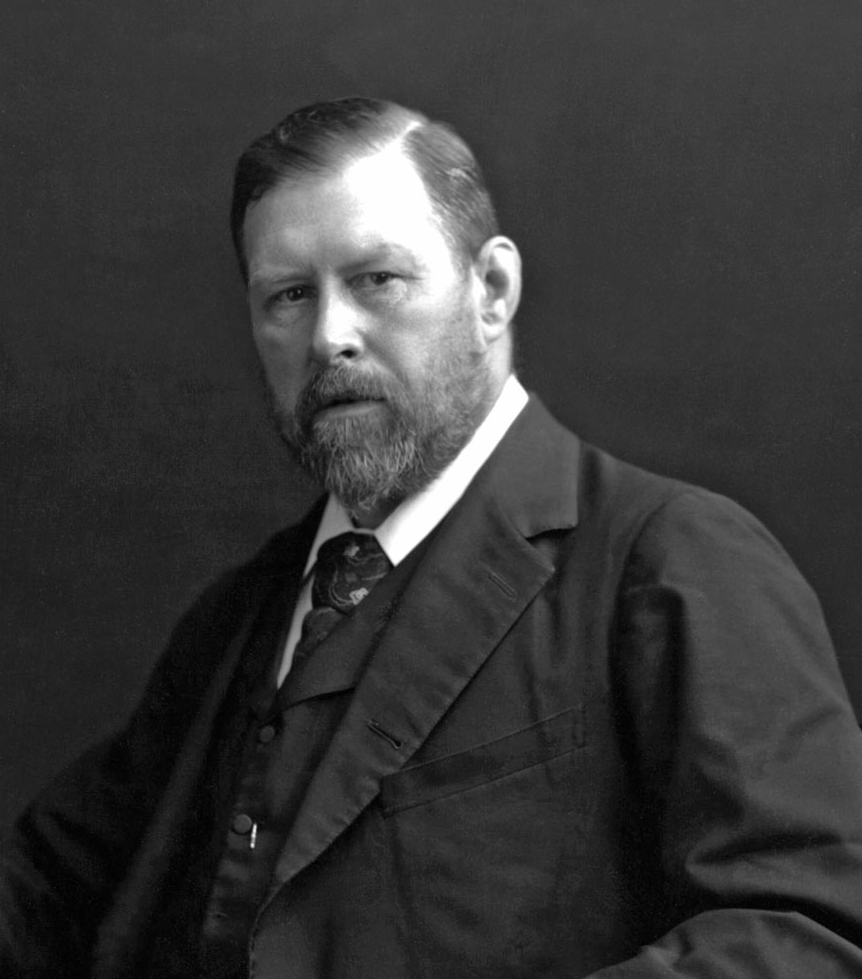
Bram Stoker
1847–1912 · Ireland
“Listen to them, the children of the night. What music they make!”
Peak-work percentile in the canon.
The lineage through Bram Stoker
Drew From(3)
who shaped Bram Stoker
- Dracula's collage of diaries, letters, telegrams and newspaper clippings is the technique Collins pioneered in The Woman in White
- The multi-witness, no-single-narrator form that makes the vampire feel pieced-together-from-evidence is borrowed straight from Collins
- Reviewers caught the debt at the time — read the Woman in White first and you'll see the blueprint Stoker was building on
via Hamlet
- Dracula quotes Hamlet outright — in his journal Harker reaches for the ghost of Hamlet's father, and admits he never understood what Shakespeare meant until the Count
- No coincidence: Stoker ran Irving's Lyceum, where Hamlet was a staple, and had reviewed the play himself
- A reader who knows the ghost on Elsinore's battlements hears the older haunting beneath Stoker's newer one
- Dracula names its own ancestor: Harker, trapped in the castle, says it "seems horribly like the beginning of the Arabian Nights, for everything has to break off at cockcrow"
- The dawn-interrupted tale — a story always cut off until the next night — is the rhythm Stoker borrows for his diary-built dread
Portraits
The defining likeness: the W. & D. Downey 1906 photogravure held by the National Portrait Gallery, London (NPG x3769), signed by Stoker — the bearded, full-face portrait reprinted nearly everywhere.
W. & D. Downey, 1906
Cropped and retouched 1906 portrait — a clean, high-resolution face shot commonly reused across Wikipedia language editions.
1906
Famous Quotes
“The blood is the life!”
“Welcome to my house! Enter freely and of your own will!”
“I am Dracula; and I bid you welcome, Mr. Harker, to my house.”
“Listen to them—the children of the night. What music they make!”
About Bram Stoker
Irish author best known for Dracula (1897), the novel that defined the modern vampire myth. A theater manager for the actor Henry Irving for most of his career, he wrote several novels and stories, but it is Dracula's blend of Gothic horror, sexuality, and Victorian anxiety that secured his literary immortality.