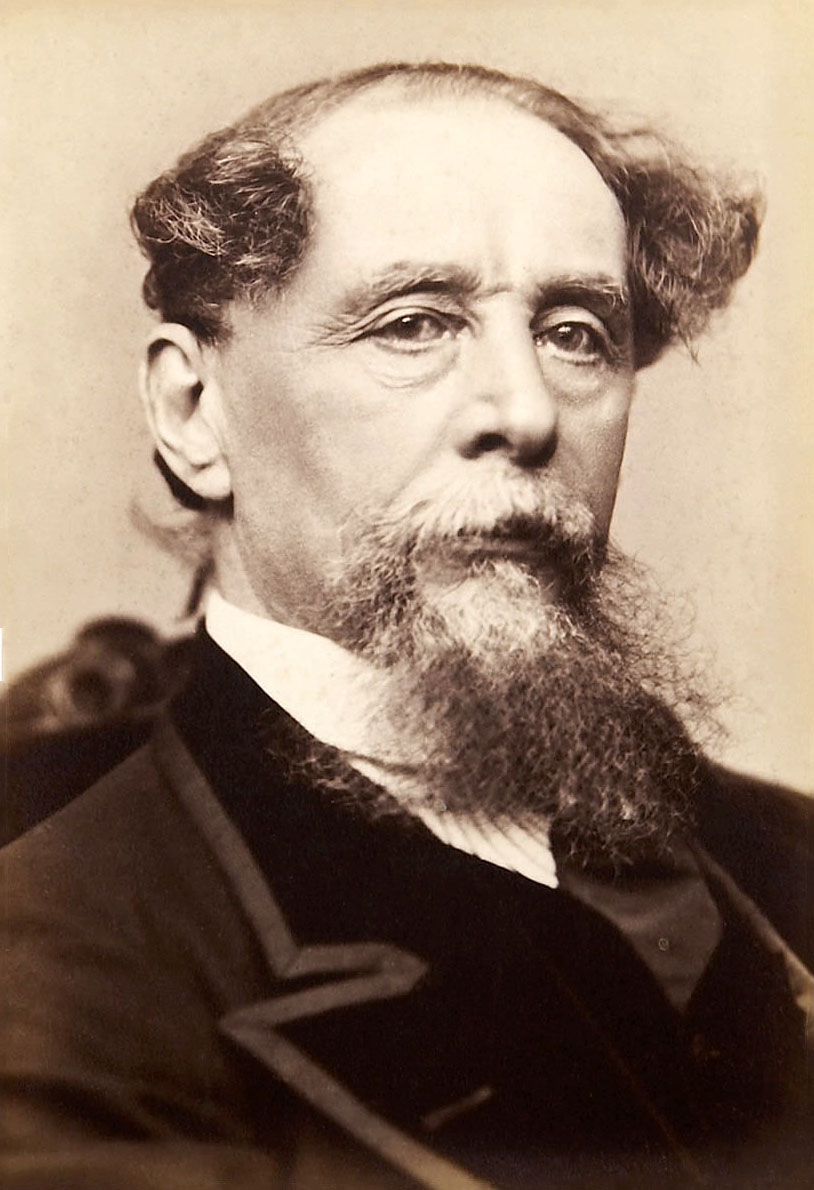
Charles Dickens
1812–1870 · England
“It was the best of times, it was the worst of times, it was the age of wisdom, it was the age of foolishness…”
Peak-work percentile in the canon.
The lineage through Charles Dickens
Drew From(6)
who shaped Charles Dickens
- The novel Dickens consciously built David Copperfield on — Fielding's picaresque made into a Victorian boy's life story
- Fielding's Tom Jones appears in the book itself: David names it among his father's books, the "glorious host" that kept him company
- The debt was heartfelt — Dickens named a son Henry Fielding Dickens while writing it; read Tom Jones first to feel the warm, sprawling comic lineage David's story descends from
via Don Quixote
- Dickens names Don Quixote directly — it's in the father's bookroom list that "kept alive my fancy" in Chapter 4
- He read and re-read Cervantes from childhood; the book is woven into the texture of David's comic, fond, slightly deluded characters
- Read Cervantes first and you can see where Dickens learned to love a foolish heart
via Robinson Crusoe
- That famous Chapter 4 passage — the father's small library that saves David — names Robinson Crusoe among the books he reads himself out of misery into
- Defoe wrote the pioneering English first-person autobiographical narrative; David Copperfield is Dickens's first attempt at that same intimate I
- Knowing what Crusoe meant to a solitary child sharpens exactly what those books are doing for David
- The wonder-book that gets David through his worst years — and, Ackroyd argues, the deepest of all Dickens's literary debts
- David Copperfield names the Arabian Nights by title (Ch. 4) and turns its nightly storytelling into David's own Scheherazade act at Salem House (Ch. 7)
- Dickens is transcribing his own boyhood escape reading; meet the Nights first and you understand exactly what it was rescuing him from
via Jane Eyre
- Esther Summerson's first-person narrative answers Jane Eyre, the recent novel whose success Dickens couldn't ignore
- The shared arc gives it away — orphan, cruel aunt, governess's place, the pull toward marrying the master — Brontë's plot run through Dickens's hands
- Read Jane Eyre first and Esther reads as a deliberate response: the same woman, a colder world
- The title of Esther's opening chapter, "A Progress," is Dickens tipping his hand toward Bunyan
- Dickens carried Bunyan all his life — he'd already saluted him in Oliver Twist's subtitle — and Esther's arc runs as a pilgrim's passage through successive symbolic bleak houses
- Reading Bunyan first reveals the older bones under the novel: a soul making moral progress through a fallen world
Portraits
The defining youthful likeness of Dickens at 27 (NPG, London); engraved as the Nicholas Nickleby frontispiece and reproduced more than any other early portrait of him.
Daniel Maclise, 1839
Gurney's New York portrait from Dickens's 1867-68 American reading tour; the iconic late head-and-shoulders photograph used as a standard frontispiece.
Jeremiah Gurney, 1867
Famous Quotes
“It was the best of times, it was the worst of times, it was the age of wisdom, it was the age of foolishness, it was the epoch of belief, it was the epoch of incredulity, it was the season of Light, it was the season of Darkness, it was the spring of hope, it was the winter of despair, we had everything before us, we had nothing before us, we were all going direct to Heaven, we were all going direct the other way.”
“It is a far, far better thing that I do, than I have ever done; it is a far, far better rest that I go to than I have ever known.”
“Whether I shall turn out to be the hero of my own life, or whether that station will be held by anybody else, these pages must show.”
“Annual income twenty pounds, annual expenditure nineteen nineteen and six, result happiness. Annual income twenty pounds, annual expenditure twenty pounds ought and six, result misery.”
About Charles Dickens
English novelist and social critic, the most popular author of the Victorian era. His novels — David Copperfield, Bleak House, Great Expectations — combine brilliant characterization, social conscience, and irresistible storytelling. Serialized in magazines, his works were cultural events, and his advocacy for the poor helped reshape social policy in Victorian England.
Charles Dickens, Ranked
According to 
Where to start with Charles Dickens →
- 9David Copperfield1850Charles DickensEasy·Epic·1,024 pagesInfluence60Popularity65The Age of the NovelNovelEnglish
- 110A Tale of Two Cities1859Charles DickensEasy·Long·406 pagesInfluence59Popularity91The Age of the NovelHistorical FictionEnglish
- 171Bleak House1853Charles DickensEasy·Epic·945 pagesInfluence60Popularity64The Age of the NovelNovelEnglish
- 110A Tale of Two CitiesCharles Dickens1859The Age of the NovelEasyLong4065991Historical FictionEnglish