
Don Quixote
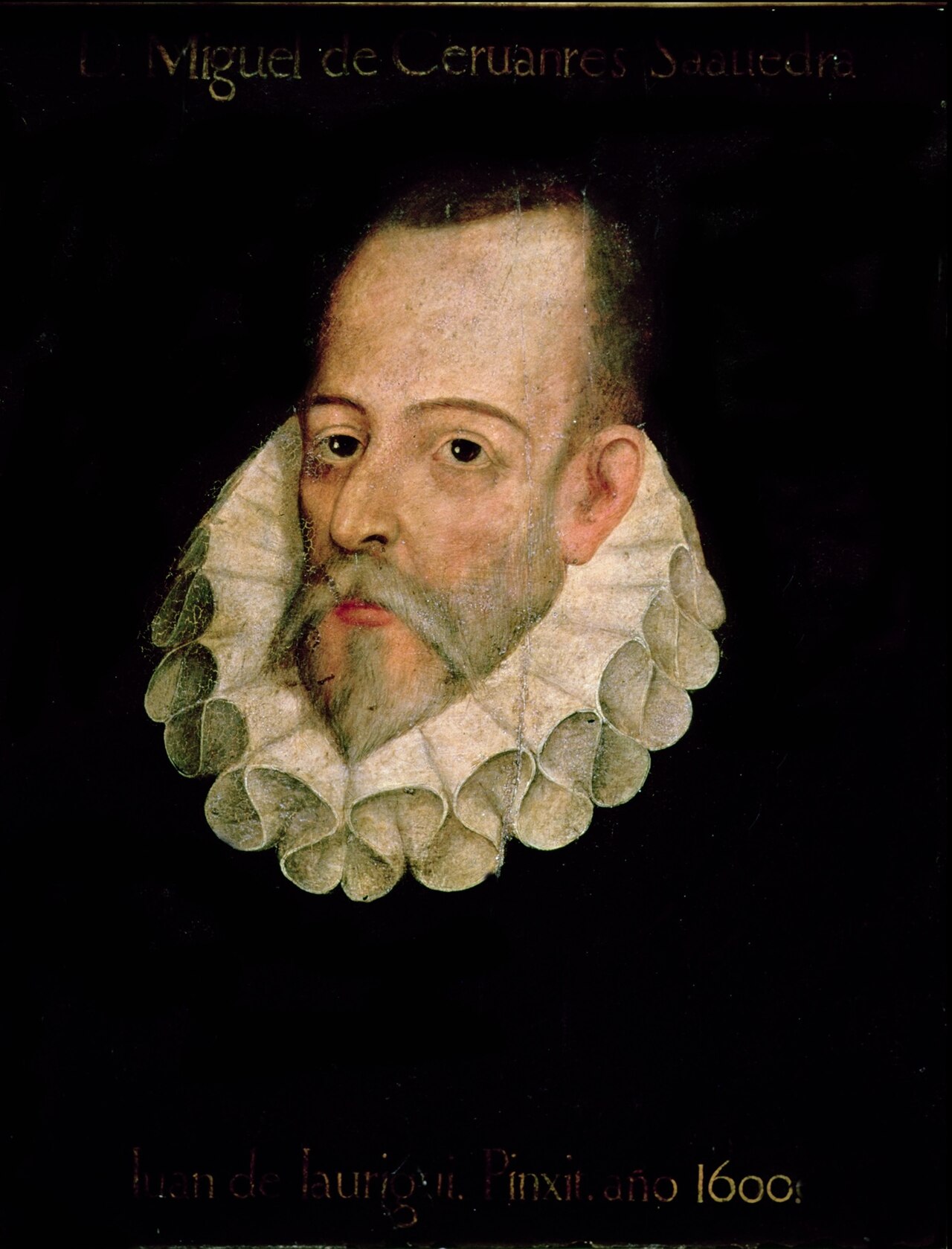
Read this if you…
- prefer the vibe and theme of a book as opposed to quality writing - funny,ironic, seriously unserious
- like a protagonist who is mostly the butt of the joke
- want to read the first modern novel, it's unbelievably influential to everything coming after
- like the blending of madness with idealism
Skip this if you…
- are expecting excellent, skilled writing sentence to sentence
- want a super tight modern plot
- don't want a book that you remember better than it actually is (while reading, I didn't love it, but looking back, i find the vibe/theme/tone brilliant)
- don't care about how historically significant it is to the form of the novel
- don't want to commit to a long ass book
The  Take
Take
Just fantastic. Love overarching theme of a positive madness. Sancho the simpleton is a great yin yang with Quixote. His insistence on upholding chivalry, knight errant and loving dulcinea never gets old. The braying town was hilarious.
The lineage through Don Quixote
- Celestina by Fernando de Rojas. Don Quixote built on it. - *Don Quixote* opens by tipping its hat to *Celestina* — Cervantes praises de Rojas's book as "divine" in his prefatory verses, then teasingly wishes it hid more of "the human" - That backhanded tribute marks de Rojas as one of the Spanish ancestors standing behind Cervantes - Reading *Celestina* first shows you the earthy, human-comedy strain Cervantes admired and was measuring himself against
- The Golden Ass by Apuleius. Don Quixote built on it. - That famous wineskin-slashing in Part 1 isn't original to Cervantes — he lifted it, knowingly, from Apuleius's Lucius butchering three wineskins he mistook for robbers - Apuleius also gave Cervantes the trick of nesting standalone tales inside a wandering main plot, the very shape *Don Quixote* runs on - Reading the *Golden Ass* first reveals just how deep this novel's roots reach into ancient comic prose
- Praise of Folly by Erasmus. Don Quixote built on it. - The Quixote's deepest paradox — a madman who is also the truest soul in the book — is Erasmian: *Praise of Folly* had already argued that folly is a higher wisdom - Cervantes inherited the lineage directly; his tutor was an Erasmian, and the pervasive humanist irony of *Folly* is the air *Don Quixote* breathes - Read *Folly* first and the knight stops looking simply insane and starts looking like a holy fool
- Metamorphoses by Ovid. Don Quixote built on it. - Don Quixote's famous Golden Age speech (I.11) is lifted straight from Ovid's Ages of Man — read the *Metamorphoses* and you'll catch the source the knight is solemnly reciting - Cervantes takes Ovid's machinery of transformation and reroutes it through delusion: the same world-changing power, but the changes are all in the mind - A deliberate Ovidian text under the comedy — knowing the original sharpens every one of Quixote's enchantments and metamorphoses
- The Aeneid by Virgil. Don Quixote built on it. - The epic Cervantes is laughing at, lovingly — the *Aeneid* is the single dominant allusion behind *Don Quixote* - Quixote's descent into the Cave of Montesinos is Aeneas's journey to Hades, recast as the daydream of a deluded country gentleman - Read Virgil first and the parody sharpens: you see exactly which epic-hero ideal Cervantes is dismantling
- James by James. Don Quixote built on it. - Quixote's stubborn faith has a biblical text behind it — and it's this one - His defense of the chivalric life borrows James almost word for word: faith without works is dead, *la fe sin obras es muerta* - Scholars point to it as Cervantes's clearest single-verse biblical borrowing; reading James first lets you catch the knight quoting Scripture to justify his fantasy
- The Adventures of Huckleberry Finn by Mark Twain. Don Quixote shaped it. - Twain named Cervantes outright as a master, and the master/sidekick pairing of Tom and Huck is *Don Quixote* and Sancho Panza moved to the Mississippi - Quixote's enchantment — seeing windmills as giants — becomes Tom's romantic delusions, with plain-spoken Huck cast as the Sancho who knows better - The picaresque road of illusion versus reality that Cervantes invented is the road Huck and Jim travel down the river
- The Idiot by Fyodor Dostoevsky. Don Quixote shaped it. - Cervantes' deluded, gentle knight became Dostoevsky's explicit blueprint - Attempting a "positively beautiful man" in Prince Myshkin, Dostoevsky named Don Quixote — in an 1868 letter to his niece — as the chief model for the type - Read it first and you'll catch what Dostoevsky was after: the holy fool the world can only laugh at
- The History of Tom Jones, a Foundling by Henry Fielding. Don Quixote shaped it. - *Don Quixote* gave the English novel its founding model — Fielding worshipped Cervantes openly - His earlier *Joseph Andrews* announces it on the title page: "Written in Imitation of the Manner of Cervantes, author of *Don Quixote*" - The deluded master and his earthy companion become, in *Tom Jones*, the pairing of Jones and Partridge — the Quixote-and-Sancho dynamic carried onto the English road
- The Life and Opinions of Tristram Shandy, Gentleman by Laurence Sterne. Don Quixote shaped it. - Sterne called his own humor "Cervantick" — the word is his confession of where it all came from - Uncle Toby is a Quixote in miniature: a gentle obsessive riding his hobby-horse the way the Knight rode Rosinante, and Sterne names them both - The slyest debt is structural — the winking, self-aware narrator of *Don Quixote*'s Part 2 is the model for Tristram's running game with his own reader
- Madame Bovary by Gustave Flaubert. Don Quixote shaped it. - *Don Quixote* is the seed of *Madame Bovary* — and Flaubert said so himself - "I can find my origins in the book I knew by heart before I knew how to read, *Don Quixote*," he wrote to Louise Colet in 1852 - The Don is undone by chivalric romances; Emma Bovary is undone by sentimental ones — Cervantes invented the disease, Flaubert gave it a new patient
- The Adventures of Tom Sawyer by Mark Twain. Don Quixote shaped it. - Cervantes invented the books-mad romantic who mistakes the world for his reading — and Twain, who praised "the good work done by Cervantes," built Tom Sawyer on that template - Tom is the deluded knight, staging grand adventures out of romance novels; Huck is his plain-spoken Sancho Panza - Where Quixote parodies chivalric romance, Tom parodies the boys'-adventure book — the same joke, three centuries on
- Dead Souls by Nikolai Gogol. Don Quixote shaped it. - *Don Quixote* became the template for the Russian comic novel - Gogol modeled Chichikov's journey directly on Cervantes — Pushkin handed him the *Dead Souls* plot precisely so he could run a Quixote-style picaresque across the whole sprawl of Russia - The road, the rogue, the gallery of fools encountered along the way: Gogol inherited all of it from the Don's wanderings
- The Brothers Karamazov by Fyodor Dostoevsky. Don Quixote shaped it. - Dostoevsky knew *Don Quixote* intimately and praised Cervantes' insight into the human heart at length in *A Writer's Diary* - Cervantes' tools carry straight into *The Brothers Karamazov* — the intrusive, half-comic narrator who keeps stepping into the frame, the tales nested inside the tale - One courtroom aside in Karamazov is so Cervantine it could have come straight off Quixote's page
- David Copperfield by Charles Dickens. Don Quixote shaped it. - One of Dickens's lifelong favorites — and one of the books that built him - *Don Quixote* sits in young David Copperfield's childhood book-cache, the small hoard that "kept alive my fancy" through a miserable boyhood - Cervantes's quixotic comedy — the deluded idealist played for both laughs and tenderness — feeds straight into Dickens's gallery of lovable, self-fooling eccentrics
- Middlemarch by George Eliot. Don Quixote shaped it. - Eliot took up Cervantes's project consciously — idealism corrected by reality, the dreamer measured against the world - She opens Chapter 2 of *Middlemarch*, where Dorothea first meets Casaubon, with a *Don Quixote* epigraph: the Mambrino's-helmet exchange between the Don and Sancho - Dorothea is Quixote's heir — her lofty vision of marriage to a great scholar is exactly the kind of grand delusion Cervantes anatomized first
- Fathers and Sons by Ivan Turgenev. Don Quixote shaped it. - Cervantes gave Turgenev one of his two master-types — in the 1860 essay "Hamlet and Don Quixote," the Don is the self-sacrificing idealist, all conviction and doomed altruism - Turgenev praised Cervantes' "instinct of genius" and built a whole character theory on the Quixote/Hamlet split - That framework is the lens critics use to read Bazarov and the generational clash of *Fathers and Sons*
- Bleak House by Charles Dickens. Don Quixote shaped it. - Cervantes invented the type Dickens couldn't resist — the deluded idealist and his earthbound foil — and *Bleak House* reaches straight for it - Lady Dedlock pegs Jarndyce as a "Don Quixote character," and the whole Esther–Woodcourt–Guppy triangle plays as a knight, a Dulcinea, and a comic Sancho - A reminder that the Quixote/Sancho pairing became a permanent tool for English novelists naming what they were doing
- Oblomov by Ivan Goncharov. Don Quixote shaped it. - Cervantes gave Goncharov his comic engine: the deluded dreamer and his exasperated servant. Oblomov and his serf Zakhar are a Russian Quixote and Sancho, their endless squabbles continually setting decayed grandeur and exalted daydreams against bleak reality. - The master-servant comedy of inseparable opposites — the grand interior life shadowed by a shabby, grumbling realist — is Cervantes' invention, and Goncharov bends it from chivalric quest to terminal indolence.
- A Sentimental Education by Gustave Flaubert. Don Quixote shaped it. - Flaubert's earliest pleasure was *Don Quixote* read aloud to him as a child — he called it the origin of his whole imagination - That Cervantine pattern resurfaces in Frédéric Moreau: a young man whose fiction-fed dreams of love and glory shatter against bourgeois reality - The Quixote here is no longer comic but melancholy — Flaubert kept the deluded reader and stripped away the windmills
Depicted in Art
Don Quixote on Rocinante looks down at a dead mule sprawled across a rocky path while Sancho rides up behind him.
Honoré Daumier, 1855
A taller and more spectral Don Quixote on Rocinante presses forward against a glaring sky while Sancho on his donkey trails as a stocky silhouette behind.
Honoré Daumier, 1868
Don Quixote on Rocinante and Sancho on his donkey ride side by side, drawn in David's polished 19th-century French illustrative line.
Jules David
Don Quixote on Rocinante and Sancho on his donkey ride together through a sun-bleached, schematic landscape rendered in Daumier's gestural late style.
Honoré Daumier, 1867
Don Quixote sits among heaped books in a dim study, lost in a chivalric daydream as the housekeeper and niece look on with alarm.
Eugène Delacroix, 1824
An early French engraving of Don Quixote and Sancho on horseback, drawn in the stiff, emblematic style of mid-17th-century print culture.
Jacques Lagniet, 1650
Don Quixote and Sancho dine at the wedding banquet of Quiteria and Basil; the seated knight, lean and grave, surveys the bustling rustic feast.
Gustave Doré, 1863
Don Quixote on Rocinante stands in profile in a wide, hazy plein-air landscape in Corot's silvery late manner.
Jean-Baptiste-Camille Corot, 1868
Don Quixote on Rocinante is hoisted into the air by a windmill's sail as the lance shatters; Sancho Panza watches from below on his donkey.
Gustave Doré, 1863
Don Quixote on a gaunt Rocinante leads the way through a barren landscape while Sancho Panza follows behind on his donkey, drinking from a flagon.
Honoré Daumier, 1855
Recommended Editions

Edith Grossman
Ecco · 2003
Grossman made Cervantes funny in English, which sounds easy and isn't after four hundred years. Modern voice, clean prose, and the version that finally let American readers find Don Quixote without it feeling assigned.
Please support us by purchasing through these links, at no extra cost to you!
Notable Quotes
In a village of La Mancha, the name of which I have no desire to call to mind, there lived not long since one of those gentlemen that keep a lance in the lance-rack, an old buckler, a lean hack, and a greyhound for coursing.
Screen & Stage
 loose
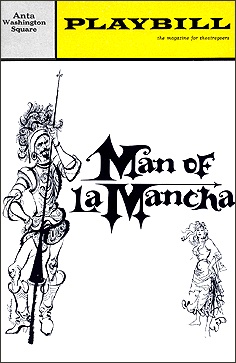
looseMan of La Mancha
Stage · 1965
Dale Wasserman / Mitch Leigh / Joe Darion
 loose
looseDon Quixote
Opera · 1869
Marius Petipa / Ludwig Minkus
 loose
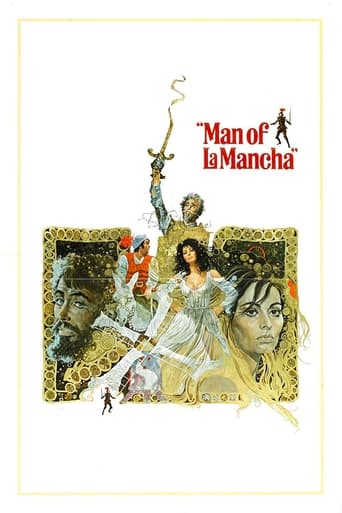
looseMan of La Mancha
Film · 1972
Arthur Hiller
 loose
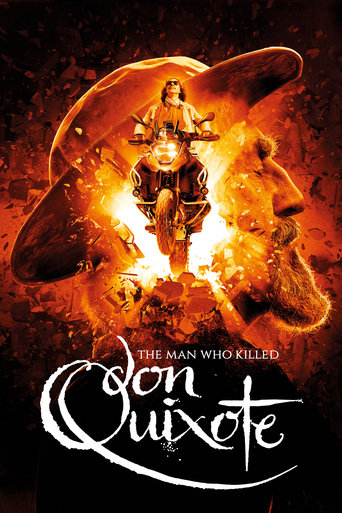
looseThe Man Who Killed Don Quixote
Film · 2018
Terry Gilliam
Posters via The Movie Database (TMDB)
- Albert Einstein, physicist, 1879–1955: "Einstein kept Don Quixote on his night table: "It is the book which he enjoys most and likes to read for relaxation.""
- William Faulkner, American novelist, 1897–1962, Nobel laureate: "Don Quixote — I read that every year, as some do the Bible."
- Fyodor Dostoevsky, Russian novelist, 1821–1881: "The final and the greatest expression of human thought, the most bitter irony a human is capable of expressing."
- Vladimir Nabokov, Russian-American novelist, 1899–1977: "A gaunt giant on a lean nag, forever riding through our dreams. His blazon is pity, his banner is beauty."
- Ivan Turgenev, Russian novelist, 1818–1883: "Notice that this mad wandering knight is the most moral being in the world."
- Gustave Flaubert, French novelist, 1821–1880: I find my origins in the book I knew by heart before I could read — Don Quixote.
- Salman Rushdie, British-Indian novelist, b. 1947: Don Quixote is astonishingly modern, even postmodern.
- Sigmund Freud, neurologist, founder of psychoanalysis, 1856–1939: Freud taught himself Spanish to read Cervantes, and in 1883 told his fiancée he was more absorbed in Don Quixote than in brain anatomy.
- Harold Bloom, American literary critic, 1930–2019: "It remains the best as well as the first of all the novels."