
Read this if you…
- want the foundational liberation narrative in Western culture — slaves walking out of Egypt, the parting of the Red Sea
- like Moses as a character: stutterer, fugitive, reluctant prophet arguing with a burning bush
- care about the Ten Commandments in their original setting — thunder, smoke, a mountain you couldn't touch without dying
Skip this if you…
- don't want to read explicitly religious/Christian texts
The lineage through Exodus
- Narrative of the Life of Frederick Douglass by Frederick Douglass. Exodus shaped it. - Douglass taught himself to read on the KJV and could quote Exodus from memory — and he turned its deliverance story into the shape of his own life - His escape from slavery is cast as a new Exodus: Pharaoh's Egypt becomes the slaveholding South, the Promised Land becomes freedom in the North - The Mosaic liberator — one man leading his people out of bondage — is the role Douglass writes himself into
- The Pilgrim's Progress by John Bunyan. Exodus shaped it. - *Exodus* gave Bunyan his master plot: a journey out of bondage, through the wilderness, toward a promised land - Christian's flight from the City of Destruction to the Celestial City reworks the deliverance-from-Egypt arc beat for beat - Bunyan even arms his hero with Moses' rod and invokes the Red Sea crossing — the *Exodus* typology is right there in his margins
- Self-Reliance and Nature by Ralph Waldo Emerson. Exodus shaped it. - Emerson plunders Exodus to make the opposite point — he rewrites the Passover injunction, declaring he'd "write on the lintels of the door-post, Whim" where Israel was told to paint the blood - *Self-Reliance* takes the Old Testament's holiest commands and flips them inward: the burning-bush ground is holy because God is in *you* - The reverence is gone, the irreverence is the point — read Exodus first to feel exactly what Emerson is overturning
Depicted in Art
Multi-episode fresco: Moses strikes down the Egyptian overseer, flees to Midian, drives off the shepherds at the well, draws water for Jethro's daughters, kneels before the burning bush, and leads the Israelites out of Egypt.
Sandro Botticelli, 1482
The Israelites stream safely onto the far shore as Pharaoh's chariots and horsemen are overwhelmed by collapsing walls of water; Moses gestures with his rod from the right.
Cosimo Rosselli (and workshop), 1482
The horned, bearded prophet sits with tablets tucked under one arm, fingers tangled in his flowing beard, on the verge of rising in righteous anger.
Michelangelo Buonarroti, 1515
Egyptian soldiers, horses, and chariots are tossed and submerged in colossal cresting waves under a dark, stormy sky.
Gustave Doré, 1866
Moses crouches with his back to the viewer and his sandal in hand before a small bush ablaze with golden light, sheep scattered around him.
Domenico Fetti, 1614
Israelites dance and raise their arms in ecstatic worship around a golden bull-calf on a plinth while Aaron presides; Moses descends from Sinai in the distant background with the tablets raised.
Nicolas Poussin, 1634
Israelites crowd the far shore in triumphant attitudes — gesturing, praying, gathering spoils — as the Egyptian army drowns behind them in collapsing walls of water.
Nicolas Poussin, 1634
An elderly, anguished Moses lifts the two stone tablets high above his head, his face caught between fury and devotion.
Rembrandt van Rijn, 1659
A muscular, bearded Moses presents the two stone tablets at chest height, his head turned in three-quarter profile, robes falling in heavy classical folds.
Guido Reni, 1625
Moses kneels with his sandals removed before a slender tree wreathed in golden flame, shielding his eyes as God speaks from the fire.
Sébastien Bourdon, 1643
Moses descends a craggy slope, the two stone tablets clutched against his chest, radiant beams streaming from his forehead.
Gustave Doré, 1866
Moses sits on the rocky ground unfastening his sandal while a small tree blazes with flame on a hilltop and the figure of God leans out of the fire to address him.
Dieric Bouts, 1465
Egyptian chariots, horses and soldiers tumble and drown in churning waters in the foreground; on the left bank Moses raises his staff with the Israelites behind him.
Lucas Cranach the Elder, 1530
A crowd encircles the golden calf raised high on a column while figures kneel, dance, and gesture in worship beneath an open Tuscan landscape.
Filippino Lippi, 1500
Israelites bend, kneel, and reach up to gather the white flakes raining from a luminous sky onto the wilderness floor; Moses and Aaron stand in the middle distance.
Jacopo Tintoretto, 1577
Recommended Editions

King James Version
Oxford University Press · 1611
The most influential and commonly quoted translation in English. The prose rhythm everyone else is responding to, even modern translations.
Please support us by purchasing through these links, at no extra cost to you!
Notable Quotes
Thus saith the LORD God of Israel, Let my people go, that they may hold a feast unto me in the wilderness.
Screen & Stage
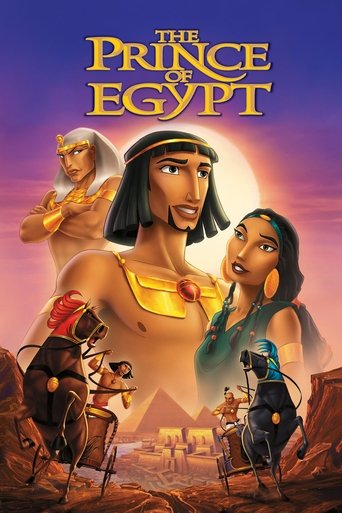
The Prince of Egypt
Film · 1998
Steve Hickner
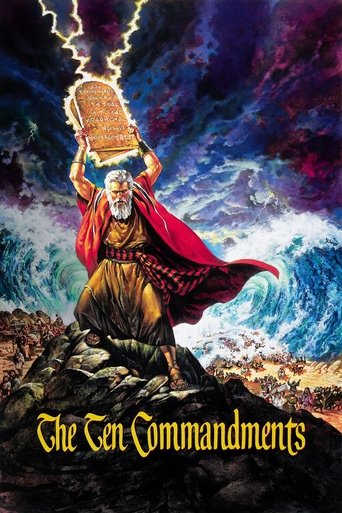
The Ten Commandments
Film · 1956
Cecil B. DeMille
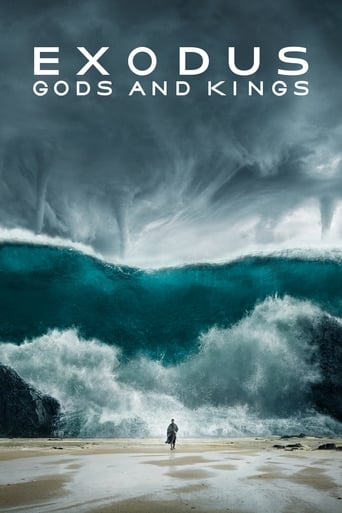
Exodus: Gods and Kings
Film · 2014
Ridley Scott
Posters via The Movie Database (TMDB)
- Martin Luther King Jr., American civil rights leader, 1929–1968: "I've been to the mountaintop... and I've looked over, and I've seen the Promised Land."
- Frederick Douglass, American abolitionist and statesman, 1818–1895: "This, to you, is what the Passover was to the emancipated people of God."
- Cecil B. DeMille, American film director, 1881–1959: "Whether men are to be ruled by God's law, or by the whims of a dictator like Rameses."
- Marilynne Robinson, Pulitzer Prize-winning novelist, b. 1943: "The law of Moses so far values life above property that it forbids killing a thief who is breaking and entering by daylight."
- Northrop Frye, Canadian literary critic, 1912–1991: "A sequence of seven main phases: creation, revolution or exodus (Israel in Egypt), law, wisdom, prophecy, gospel, and apocalypse."
- Michael Walzer, Princeton political theorist, b. 1935: Walzer reads Exodus as the West's founding political story—the prototype for revolutions from the Puritans to the American founding.
More by Moses
- 29Genesis~550 BCMosesGrueling·Quick·128 pagesInfluence98Popularity77BibleScripture — NarrativeHebrew
- Exodus~550 BCMosesGrueling·Quick·109 pagesInfluence—Popularity—BibleScripture — NarrativeHebrew
- Leviticus~500 BCMosesGrueling·Quick·82 pagesInfluence—Popularity—BibleScripture — LawHebrew
- Numbers~550 BCMosesGrueling·Quick·110 pagesInfluence—Popularity—BibleScripture — NarrativeHebrew
- Deuteronomy~621 BCMosesGrueling·Quick·95 pagesInfluence—Popularity—BibleScripture — LawHebrew