

The Age of the Novel19th-Century American Literature
Read this if you…
- love getting super deep and nitty-gritty inside characters minds
- want to explore the idea of freedom not necesarrily leading to best choices
Skip this if you…
- find moment-to-moment interior monologue tedious. want action, not deliberation. (i mean each event is drawn out so long, so much detail, that's the point)
The  Take
Take
Took me a while to get into it, but by the second half, I could not get enough of the keen insights into moment to moment psychology and put-on appearances. Very subtle slow build, but ultimately rewarding if one cares more about the actual writing sentence to sentence instead of an overall plot
Connections
The lineage through The Portrait of a Lady
- Middlemarch by George Eliot. The Portrait of a Lady built on it. - Isabel Archer is James's answer to Eliot's Dorothea — both bright, idealistic women who marry the wrong cold man and learn it slowly - James reviewed *Middlemarch* in 1873 and set his ambition against it: 'less brain than *Middlemarch* but more form' - He admitted the debt outright in 1908, naming Eliot's heroines as influences; reading Dorothea's marriage first makes Isabel's read as deliberate variation, not coincidence
- Fathers and Sons by Ivan Turgenev. The Portrait of a Lady built on it. - James's whole method here is Turgenev's: build the novel around one vividly seen, morally interesting person and let the plot gather around her - In his own Preface, James names Turgenev's character-first technique as the seed that became Isabel Archer - *Fathers and Sons* shows the approach in its Russian original — read it first and you see the engine James retooled for Isabel
- The Scarlet Letter by Nathaniel Hawthorne. The Portrait of a Lady built on it. - Isabel Archer is James reworking Hawthorne's Hester Prynne — the heroine boxed in by a marriage and her own sense of duty - He came to *Portrait* fresh off his 1879 critical biography of Hawthorne, the older novelist fully in his head - Isabel's last decision — flee with Caspar Goodwood or go back to Osmond — replays Hester's forest appeal to Dimmesdale; read *The Scarlet Letter* first and the choice rings with thirty years of American moral inheritance
- The Good Soldier: A Tale of Passion by Ford Madox Ford. The Portrait of a Lady shaped it. - Ford revered James — in 1915, the very year of *The Good Soldier*, he published a full critical study of him, engaging deeply with *The Portrait of a Lady* - James's "transatlantic theme" — Americans loose among Europeans, innocence colliding with old-world manners — is the soil *The Good Soldier* grows in - And the Jamesian habit of letting a story arrive obliquely, through a watching consciousness, becomes Ford's whole engine: the unreliable narrator pushed to its breaking point
Editions
Recommended Editions

#1Top Pick$13.00$12.12
Penguin Classics
2003
Philip Horne's Penguin prints the 1881 text, which is fresher and less mannered than James's heavily revised 1908 rewrite. Most modern critics agree this is the version to read.
Please support us by purchasing through these links, at no extra cost to you!
Notable Quotes
Under certain circumstances there are few hours in life more agreeable than the hour dedicated to the ceremony known as afternoon tea.
Adaptations
Screen & Stage
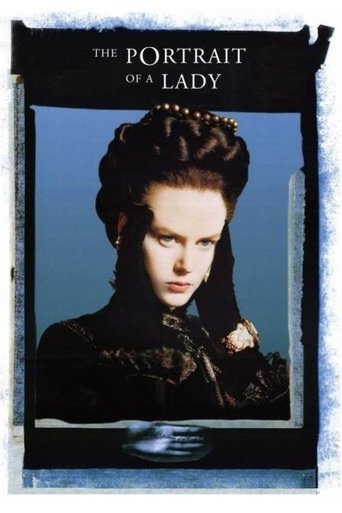
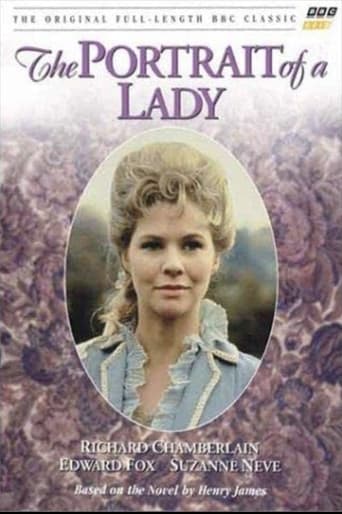
Posters via The Movie Database (TMDB)
AcclaimPraised by 4 notable voices
- Roger Ebert, film critic, Pulitzer Prize winner, 1942–2013: "Anyone who believes Henry James is bloodless has never really read him."
- T.S. Eliot, poet & critic, 1888–1965: "He had a mind so fine that no idea could violate it."
- Ezra Pound, poet, 1885–1972: "If it is the business of the artist to make humanity aware of itself; here the thing was done, the pages of diagnosis."
- Jane Campion, filmmaker, b. 1954: "I am Isabel, you know … that story touches us all."