
Read this if you…
- want a Bible book where God's name never appears — the only one
- like a court-intrigue thriller: a Jewish queen, a genocidal vizier, a king who can't sleep, and a tense reversal where the villain hangs on his own gallows
- care about the origin story of Purim — the festival where Jews still read this scroll while booing Haman's name
Skip this if you…
- don't want to read explicitly religious/Christian texts
The lineage through Esther
- Jane Eyre by Charlotte Brontë. Esther shaped it. - Charlotte Brontë threaded *Esther* straight into the heart of *Jane Eyre* — Jane is her Esther, Rochester her King Ahasuerus - Listen for Ahasuerus's repeated offer of "half of my kingdom" (Esther 5:3, 6): Rochester echoes it almost word for word in his courtship of Jane - A career-long fixation for Brontë — her brother Branwell's "Queen Esther" hung in the parsonage from the time she was fourteen
- The Hunchback of Notre-Dame by Victor Hugo. Esther shaped it. - The court-and-outsider structure Hugo would borrow nineteen centuries later - Joseph Prouser reads *The Hunchback of Notre-Dame* as a deliberate "midrash on Esther" — Hugo recasts Ahasuerus's feast as the Festival of Fools and the queen-search as its contests - Even the names rhyme: Esther becomes Esmeralda, both heroines bearing dual identities, both moving from outside into a court they expose
Depicted in Art
Esther sits at a banquet table gesturing at Haman, who shrinks back; Ahasuerus turns in shock between them under a heavy curtain.
Jan Lievens, 1625
Mordecai rides a white horse in royal robes through a crowd, looking up; the composition is steeply foreshortened from below.
Paolo Veronese, 1556
Haman writhes crucified on a tree at center; Ahasuerus reclines in bed at right while Mordecai sits at the gate at left.
Michelangelo, 1512
Esther swoons backward into an attendant at the foot of the long throne staircase; Ahasuerus reaches down with his scepter from the top.
Gustave Doré, 1866
Ahasuerus crowns Esther in an open loggia; attendants and maidens cluster on either side of the throne.
Filippino Lippi, 1480
Ahasuerus springs up from the banquet table overturning a fruit dish; Haman cowers at right as Esther watches, hands clasped.
Jan Steen, 1671
Esther collapses backward into her attendants as Ahasuerus rises from his throne, scepter outstretched; a frieze of figures lines the steps.
Nicolas Poussin, 1655
Esther kneels before the enthroned king, who extends his golden scepter; courtiers stand behind a low marble parapet.
Konrad Witz, 1435
Mordecai rides through Susa on the king's horse, led by Haman on foot; crowds press in around the procession.
Sandro Botticelli, 1475
Recommended Editions

King James Version
Oxford University Press · 1611
The most influential and commonly quoted translation in English. The prose rhythm everyone else is responding to, even modern translations.
Please support us by purchasing through these links, at no extra cost to you!
Notable Quotes
and who knoweth whether thou art come to the kingdom for such a time as this?
Screen & Stage

Esther
Opera · 1732
George Frideric Handel
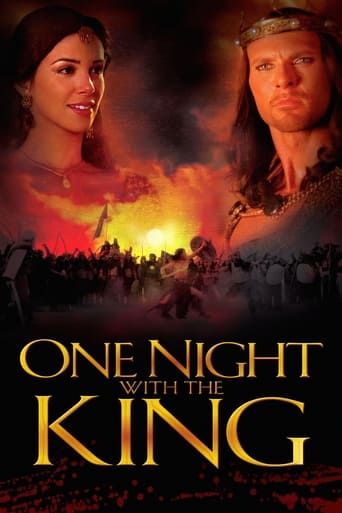
One Night with the King
Film · 2006
Michael O. Sajbel
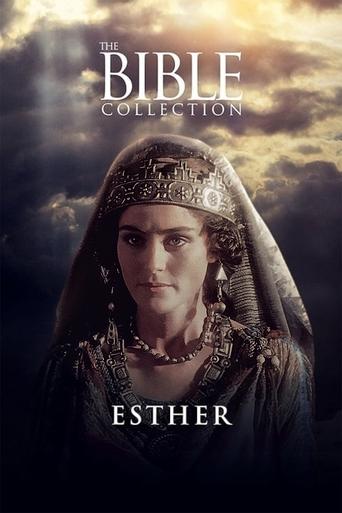
Esther
TV · 1999
Raffaele Mertes
Posters via The Movie Database (TMDB)
- Maimonides (Moses ben Maimon), medieval Jewish philosopher & Torah scholar, 1138–1204: "All the books of the Prophets and the Writings will be nullified in the days of the Messiah, except for the Scroll of Esther."
- Robert Alter, literary critic & Hebrew Bible translator, b. 1935: Alter reads Esther's shrewd triumph as, at heart, a secular entertainment — shot through with farce and sly sexual comedy.
- Karen H. Jobes, American biblical scholar (Wheaton College emerita), b. 1948: "The great paradox of Esther is that God is omnipotently present even where God is most conspicuously absent."
- Carol M. Bechtel, American Old Testament scholar (Western Theological Seminary), b. 1959: "In Esther we laugh until we cry."
- Adele Berlin, Hebrew Bible scholar (University of Maryland), b. 1943: Esther is best read as a farce — and once its comic artistry is seen, its biggest interpretive problems melt away.
More by Unknown
- 17Job~500 BCUnknownHard·Quick·113 pagesInfluence90Popularity54BibleWisdomHebrew
- 83Beowulf~1000UnknownHard·Quick·213 pagesInfluence66Popularity72MedievalEpicOld English
- 97The Nibelungenlied~1200UnknownHard·Long·403 pagesInfluence64Popularity30MedievalEpicMiddle High German
- 166The Song of Roland~1100UnknownHard·Short·224 pagesInfluence66Popularity30MedievalEpicOld French
- 196The Poetic Edda~1270UnknownHard·Medium·382 pagesInfluence6Popularity30MedievalEpicOld Norse
- Judith~100 BCUnknownHard·Quick·37 pagesInfluence—Popularity—BibleScripture — NarrativeHebrew
- Prayer of Manasses~150 BCUnknownHard·Quick·3 pagesInfluence—Popularity—BibleLyricAncient Greek
- 1 Maccabees~100 BCUnknownHard·Quick·77 pagesInfluence—Popularity—BibleScripture — NarrativeHebrew
- 2 Maccabees~124 BCUnknownHard·Quick·54 pagesInfluence—Popularity—BibleScripture — NarrativeAncient Greek
- Esther~400 BCUnknownHard·Quick·19 pagesInfluence—Popularity—BibleScripture — NarrativeHebrew
- 1 Esdras~150 BCUnknownHard·Quick·39 pagesInfluence—Popularity—BibleScripture — NarrativeAncient Greek
- 2 Esdras~100UnknownHard·Quick·87 pagesInfluence—Popularity—BibleApocalypticLatin
- Tobit~200 BCUnknownHard·Quick·23 pagesInfluence—Popularity—BibleScripture — NarrativeAramaic