
The Gospels
Matthew was the most quoted Gospel in the early Church and carries the most influential ethical teaching in Western history.
Read this if you…
- want the most influential writings in western history, maybe world history
- want THE Biblical Stories of Jesus, the ground source
Skip this if you…
- don't want explicitly religious/Christian writing
- don't want to read 4 versions of same story (in that case, read just 1, I'd recommend matthew personally)
The lineage through The Gospels
- Devils by Fyodor Dostoevsky. The Gospels shaped it. - Luke's Gadarene swine — the demons cast out of a man into a herd that drowns itself — gave Dostoevsky his title, his epigraph, and his governing image - In a letter to Maykov he says it plainly: "the devils went out of the Russian man and entered into a herd of swine" - *Devils* reads the whole nihilist convulsion of 1860s Russia through that single Gospel scene
- Crime and Punishment by Fyodor Dostoevsky. The Gospels shaped it. - The raising of Lazarus from John's Gospel is the spiritual hinge of the novel — Sonya reads it aloud over the murderer - *Crime and Punishment*'s closing arc of "gradual regeneration, passing from one world into another" is built on that resurrection model - Dostoevsky knew it from the inside: he carried the prison-gift New Testament to Siberia, the same book Raskolnikov carries at the end
- The Brothers Karamazov by Fyodor Dostoevsky. The Gospels shaped it. - The novel's epigraph is John 12:24 — the grain of wheat that must fall and die to bear fruit — and Zosima's whole gospel of redemptive suffering grows from it - "The Grand Inquisitor" restages Christ's wilderness temptation from Luke 4 as the central argument of the book - This is explicit, documented engagement: Dostoevsky kept a New Testament under his pillow through four years of prison, memorizing the words of Christ
- Thus Spoke Zarathustra by Friedrich Nietzsche. The Gospels shaped it. - The book Nietzsche knew best, and built *Thus Spoke Zarathustra* to invert - A pastor's son and former divinity student, he mimicked the Gospel arc on purpose — the solitary teacher who leaves at thirty, returns with a mission, gathers disciples, is misunderstood - He kept the cadence and the shape and reversed the message: a mock-gospel preaching anti-Christian morality in the very voice it set out to overthrow
- The Pilgrim's Progress by John Bunyan. The Gospels shaped it. - Bunyan's allegory runs on Gospel text — Christian's whole journey begins at a Wicket Gate lifted straight from the Sermon on the Mount - The 'strait gate' and 'narrow way' of Matthew 7:13-14 become the literal geography of salvation; Bunyan cites the verse in his own margins - Spurgeon said Bunyan's prose was 'Bibline' — prick it and it bleeds scripture, and this is where most of it comes from
- The Idiot by Fyodor Dostoevsky. The Gospels shaped it. - Dostoevsky set himself the hardest task in fiction — to depict 'a positively beautiful man' — and reached straight for the Christ of these pages - Prince Myshkin is labeled 'Prince Christ' in the notebooks: forgiveness, no anger, love for all, modeled explicitly on the Gospel original - These chapters are the template Dostoevsky was testing against the modern world in *The Idiot*
- Narrative of the Life of Frederick Douglass by Frederick Douglass. The Gospels shaped it. - Christ's denunciation of the Pharisees in Matthew 23 becomes Douglass's weapon against the slaveholders - In his Appendix he quotes it at length — "woe unto you, scribes and Pharisees, hypocrites!" / "They bind heavy burdens... grievous to be borne" — to expose the men who whipped slaves on Sunday - Douglass turns the Gospel's own words back on a Christian nation, splitting "the Christianity of Christ" from "the slaveholding... Christianity of this land"
- Uncle Tom’s Cabin by Harriet Beecher Stowe. The Gospels shaped it. - Stowe's novel is, at bottom, the Gospel preached as fiction — Christian love set against slavery - Uncle Tom owns and reads only the New Testament, patterning his whole life on the Jesus of these pages - Read these first and *Uncle Tom's Cabin* reveals itself as a deliberate Christ-figure built straight from Matthew and John
- Richard II by William Shakespeare. The Gospels shaped it. - The Passion narrative becomes the script for a king's fall — Shakespeare stages Richard's deposition as a crucifixion - Richard names his betrayers "Pilates" who deliver him to his "sour cross," and likens his courtiers' false homage to "So Judas did to Christ" (echoing the mockery of Matthew 27) - Watch how *Richard II* turns a political surrender into a sacred betrayal — and where it gets the imagery
- The Merchant of Venice by William Shakespeare. The Gospels shaped it. - The Sermon on the Mount becomes a courtroom argument — Portia's "quality of mercy" speech is built on "Blessed are the merciful" (Matthew 5) - She presses the logic of the Lord's Prayer too: "we do pray for mercy, and that same prayer / Doth teach us all to render the deeds of mercy" (Matthew 6's "forgive us our debts") - *The Merchant of Venice* sets New-Law mercy against Old-Law justice — and the New Law it quotes is Matthew's
- Measure for Measure by William Shakespeare. The Gospels shaped it. - The title is a direct quotation: "with what measure ye mete, it shall be measured to you again" (Matthew 7) - That single verse from the Sermon on the Mount becomes the play's whole engine — judge others, and be judged by the same standard - *Measure for Measure* is the Gospel's warning about judgment dramatized as a plot
- Confessions by Augustine of Hippo. The Gospels shaped it. - The book Augustine could not stop quoting — the *Confessions* is a mosaic of scripture, and the Gospels supply its load-bearing stones - John's prologue, *the Word made flesh*, is Augustine's measuring stick: it's what he finds the Platonists lacking, the one thing their philosophy could never reach - Matthew's *knock and it shall be opened* runs through the whole book and gives Augustine his closing words — the Gospel doesn't just influence the *Confessions*, it ends it
- Les Misérables by Victor Hugo. The Gospels shaped it. - The moral engine of *Les Misérables* runs on gospel grace — Bishop Myriel gives away his silver to redeem a convict, the way Christ gives himself to redeem the world - Hugo frames Jean Valjean's conversion in explicitly Gospel terms: mercy that buys a soul, set against the institutional religion that only condemns - Read the parable of unconditional forgiveness here, then watch Hugo build a 1,400-page novel on it
- The Song of Roland by Unknown. The Gospels shaped it. - The Passion narrative becomes the moral architecture of the first great chanson - Roland dies a Christ-figure, his death scene shadowing the Passion; his twelve paladins echo the Twelve Apostles, and the emir's offer replays Satan tempting Jesus in the wilderness (Matthew 4) - Above all, the traitor Ganelon is a new Judas — betraying his lord, doomed to a traitor's end
- Jane Eyre by Charlotte Brontë. The Gospels shaped it. - Of all scripture, it is *The Gospels* — Matthew above all — that Brontë reaches for most in *Jane Eyre* - The Sermon on the Mount runs as the deepest current beneath Jane's moral struggles, an Anglican clergyman's daughter writing with the Gospel in her bones - Brontë doesn't just allude; she quotes and reworks Gospel passages directly into the narrative
- The Scarlet Letter by Nathaniel Hawthorne. The Gospels shaped it. - Hawthorne reaches into *The Gospels* for the bones of his novel: the adulterous-woman scene — "let him cast the first stone" — sits behind Hester's public shaming - Pearl is named verbatim from Matthew's parable of the "pearl of great price" (Matthew 13) - And Dimmesdale's scaffold becomes a Golgotha, the minister staged as a Christ-figure under judgment
- Anna Karenina by Leo Tolstoy. The Gospels shaped it. - Beneath the love story, *Anna Karenina* turns on a single Gospel doctrine — forgiveness — and Tolstoy wrestles centrally with the Sermon on the Mount - Karenin's bedside forgiveness of Anna and Vronsky is the Gospel ethic tested against wounded pride; Levin's closing conversion is its resolution - Tolstoy began his own Gospel-harmony project in these same years — the religious reading drives the whole book
- Common Sense by Thomas Paine. The Gospels shaped it. - Paine seized on the Gospel line every royalist loved — "Render unto Caesar the things which are Caesar's" (Matthew 22:21) — and turned it against the crown - His argument: the Jews of that moment had no king and answered to Rome, so the verse can't be read as a blessing on monarchy - A scriptural commonplace, repurposed into revolutionary ammunition
- Henry IV, Part Two by William Shakespeare. The Gospels shaped it. - Falstaff is the most fluent biblical quoter on Shakespeare's stage — and he reaches for *The Gospels* again and again, conjuring the rich man burning in hell from Luke's Dives and Lazarus parable - Prince Hal's whole reform arc is staged on the bones of the Prodigal Son: the wastrel who runs with thieves, then turns and is restored - Shakespeare trusted his audience to know these parables cold — the comedy and the conversion both depend on it
- King Henry IV, Part 1 by William Shakespeare. The Gospels shaped it. - The Prodigal Son grows up to become Prince Hal - Luke's parable of the wayward son who squanders himself and returns is the spine of Hal's arc — the dissolute prince who will reform into a king - Falstaff is the play's master of Gospel allusion: Dives and Lazarus from Luke 16, the prodigal's husks from Luke 15, the Geneva Bible audible under all his joking
- As You Like It by William Shakespeare. The Gospels shaped it. - Shakespeare reaches straight for the Parable of the Prodigal Son to launch his comedy - In Act 1 of *As You Like It*, Orlando casts his disinheritance as the prodigal's exile — "Shall I keep your hogs and eat husks with them?" — a near-quotation of the Luke parable - The "husks" detail betrays Shakespeare's own Geneva Bible at his elbow
Depicted in Art
Christ floats in radiant white above Mount Tabor between Moses and Elijah; below, Peter, James, and John recoil with arms raised as a desperate crowd presses around a possessed boy.
Raphael, 1520
Disciples wrestle a wind-thrashed boat as a wave crashes over the bow; Christ is woken at the stern (Mark 4:37-38).
Rembrandt van Rijn, 1633
The shaven, ragged son buries his face in his father's chest; the father's two hands rest on his back in benediction as the elder brother watches.
Rembrandt van Rijn, 1668
A lantern-bearing Christ in jeweled robes knocks at an overgrown door with no handle on the outside, set in a moonlit orchard.
William Holman Hunt, 1854
John pours water from a shallow bowl over Christ's head in the Jordan; two angels kneel at the left, one painted by the young Leonardo.
Andrea del Verrocchio and Leonardo da Vinci, 1475
Angels dance in a ring above the stable while shepherds and Magi crowd around the newborn child; demons flee at the foot.
Sandro Botticelli, 1500
Christ stands and offers bread to an apostle along a steeply receding table; angels swirl in the smoky lamplight above as serving figures cross the foreground.
Jacopo Tintoretto, 1594
Mary cradles the dead Christ's head while John throws his arms back in grief; angels writhe and wail in the sky above the diagonal rock ridge.
Giotto di Bondone, 1305
Christ at the center of a long table announces a disciple will betray him; the twelve apostles recoil in clusters of three, John leaning toward Peter at his right.
Leonardo da Vinci, 1498
Thomas leans in and pushes his finger into the wound in the risen Christ's side while two other apostles peer over his shoulder.
Caravaggio, 1602
Christ alone on the cross against a black ground, head bowed onto his right shoulder, blood at hands and feet, no other figures present.
Diego Velazquez, 1632
Judas envelops Christ in a yellow cloak and tilts in for the kiss; a thicket of torches and spear-points crowds the night sky above them.
Giotto di Bondone, 1305
Recommended Editions

King James Version
Oxford University Press · 1611
The most influential and commonly quoted translation in English. The prose rhythm everyone else is responding to, even modern translations.
Please support us by purchasing through these links, at no extra cost to you!
Notable Quotes
For God so loved the world, that he gave his only begotten Son, that whosoever believeth in him should not perish, but have everlasting life.
Screen & Stage
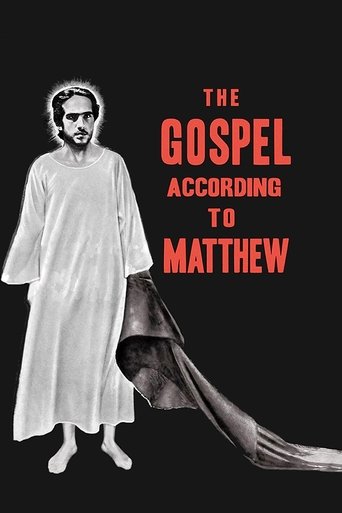
The Gospel According to St. Matthew
Film · 1965
Pier Paolo Pasolini
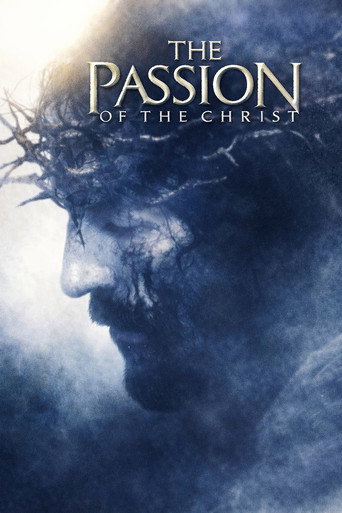
The Passion of the Christ
Film · 2004
Mel Gibson
 loose
looseThe Last Temptation of Christ
Film · 1988
Martin Scorsese
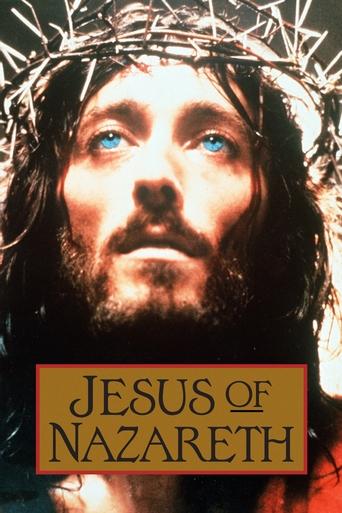
Jesus of Nazareth
TV · 1977
Franco Zeffirelli
 loose
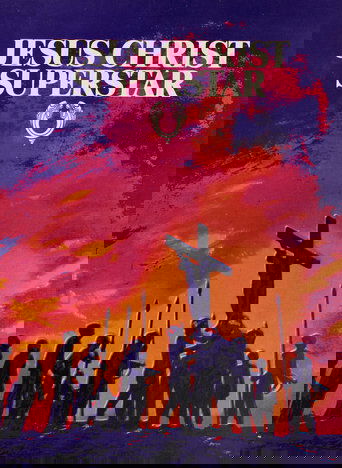
looseJesus Christ Superstar
Film · 1973
Norman Jewison
 loose
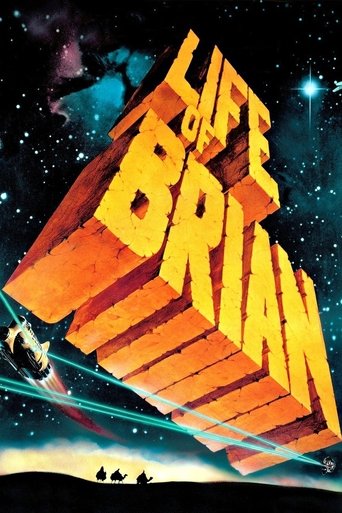
looseLife of Brian
Film · 1979
Terry Jones
Posters via The Movie Database (TMDB)
- Albert Einstein, theoretical physicist, 1879–1955: "No one can read the Gospels without feeling the actual presence of Jesus. His personality pulsates in every word."
- C. S. Lewis, literary scholar & Christian apologist, 1898–1963: "I have been reading poems, romances, vision-literature, legends, myths all my life… I know that not one of them is like this."
- Charles Dickens, English novelist, 1812–1870: "It is the best book that ever was or will be known in the world."
- Erich Auerbach, literary critic, 1892–1957: "A scene like Peter's denial fits into no antique genre… its like does not exist in the literature of antiquity."
- Thomas Jefferson, U.S. Founding Father & third President, 1743–1826: "The most sublime and benevolent code of morals which has ever been offered to man… as distinguishable as diamonds in a dunghill."
- Leo Tolstoy, Russian novelist, 1828–1910: "But together with this source of the pure water of life I found, wrongfully united with it, mud and slime which had hidden its purity from me."
- Mahatma Gandhi, Indian independence leader, 1869–1948: "The Sermon on the Mount went straight to my heart… delighted me beyond measure."