
Read this if you…
- are reading all the greatest Shakespeares
- like when succession leads to family infighting
- want Shakespeare's best plot
Skip this if you…
- aren't willing to go slow, read notes, look up analyses of famous passages (only way to "get" shakespeare)
- foolishly think shakespeare is overrated
The  Take
Take
Maybe my favorite Shakespeare plots. The disguised good guy Kent pulling strings, the evil Edmund plotting against his own family, even more devious than lears 2 daughters, the mad ramblings of the king mixed with wisdom, Edgar as poor tom leading his blind father. Absolute banger.
The lineage through King Lear
- The Complete Essays by Michel de Montaigne. King Lear built on it. - The skeptical, self-interrogating mind of *King Lear* is mined from Montaigne — 100-plus words new to Shakespeare here come straight out of Florio's 1603 translation - Edmund's amoral reasoning and Lear's doubt are the *Essays* dramatized; even Edmund's "essay or taste of my virtue" is a wink at the source - Read Montaigne first and you meet the thinking behind the play — Nietzsche called Shakespeare "Montaigne's best reader"
- Job by Unknown. King Lear built on it. - Behind the heath stands *Job* — the great man broken, demanding an answer the universe won't give - Shakespeare reworks Job's theodicy into theater: the innocent's suffering (Cordelia for Job), the formidable figure reduced to rags and questions - Read *Job* first and Lear's storm-speeches sound like a man asking what the whirlwind never quite answered
- Moby-Dick or, The Whale by Herman Melville. King Lear shaped it. - Ahab is a Shakespearean tragic hero by design — built on the *Lear*/Macbeth model of the great man undone by his own will - Melville bought a seven-volume Shakespeare set in early 1849, his "edition in glorious great type," and marked *Lear* more heavily than almost any other play - Scholars credit *Lear* with the deepest creative impact on him — its storm, its rage against the heavens, its ruined king all surface again on the *Pequod*
- Wuthering Heights by Emily Brontë. King Lear shaped it. - The one secular book Emily Brontë names inside *Wuthering Heights* — Lockwood says his threats "smacked of King Lear" - Brontë had the run of her father's Shakespeare and is reported to have been reading *Lear* as she wrote; its storm-lashed madness and inheritance-poisoned revenge are stamped all over Heathcliff - *Lear* gave her the template for a tragedy of houses torn apart from within — bloodline, betrayal, and a man raging on the moor
Depicted in Art
Lear rages bareheaded on the heath at the height of the tempest, supported by Edgar as Poor Tom, Kent, and the Fool as Gloucester arrives with a torch.
Benjamin West, 1788
Cordelia kneels at the foot of a curtained bed where the awakened Lear sits up, taking her hand in dawning recognition.
John Rogers Herbert
An aged white-bearded Lear cradles the limp body of the hanged Cordelia on a stone slab, ringed by mourning figures and a megalithic ruin.
James Barry, 1788
Lear thrusts an outstretched, accusing arm toward Cordelia in the opening throne-room scene; Goneril and Regan recoil and Kent intervenes.
Henry Fuseli
Cordelia in white embraces her two sisters in stiff farewell while Lear watches from the throne behind, the courtiers ranged across the dais.
Edwin Austin Abbey, 1898
Cordelia, slender in pale silk, stands isolated at the foot of Lear's throne while Goneril and Regan recline in jewelled gowns to one side.
Sir John Gilbert, 1873
Lear sits cross-legged on a windswept rocky bluff, raving up at the lightning, while the Fool huddles at his knee with head in hands.
William Dyce, 1851
Lear stands defiant on a wave-battered shore facing into the gale, the Fool and a loyal attendant clinging to him, a ship foundering in the distance.
John Runciman, 1767
Lear collapses over the lifeless body of Cordelia in her white shroud; Kent and Edgar look on in the dim aftermath of the battle.
Anonymous
Recommended Editions

Folger Shakespeare Library
2004
Folger's the readable one. Text on one page, notes on the facing page, written in plain English instead of textbook-speak. Catches every word and reference you'd otherwise Google, without breaking the scene to do it.
Please support us by purchasing through these links, at no extra cost to you!
Notable Quotes
As flies to wanton boys are we to the gods; they kill us for their sport.
Screen & Stage
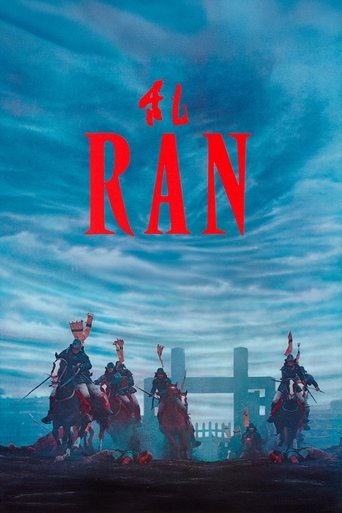
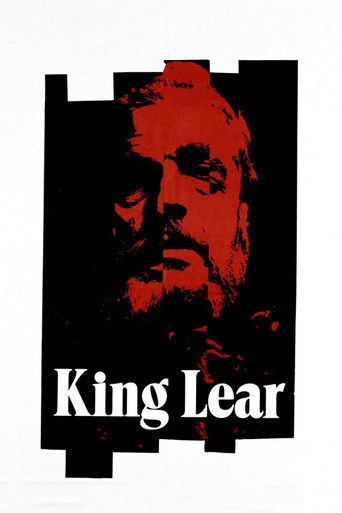
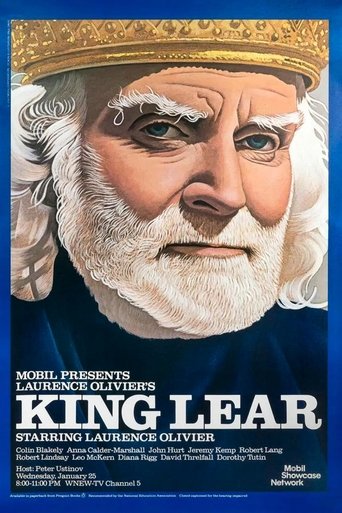
Posters via The Movie Database (TMDB)
- Percy Bysshe Shelley, English Romantic poet, 1792–1822: "King Lear may be judged to be the most perfect specimen of the dramatic art existing in the world."
- John Keats, English Romantic poet, 1795–1821: "Once again, the fierce dispute / Betwixt damnation and impassion'd clay / Must I burn through."
- Samuel Taylor Coleridge, English Romantic poet and critic, 1772–1834: "The most tremendous effort of Shakespeare as a poet."
- Harold Bloom, American literary critic (Yale), 1930–2019: Bloom devoted an entire book to Lear, calling him the most tragic of all Shakespeare's creations.

More by William Shakespeare
- 11A Midsummer Night’s Dream~1595William ShakespeareGrueling·Quick·118 pagesInfluence24Popularity81ShakespeareComedyEnglish
- 13Hamlet~1600William ShakespeareGrueling·Quick·218 pagesInfluence98Popularity96ShakespeareTragedyEnglish
- 20Othello~1603William ShakespeareGrueling·Quick·189 pagesInfluence88Popularity76ShakespeareTragedyEnglish
- 23King Lear~1605William ShakespeareGrueling·Quick·187 pagesInfluence95Popularity72ShakespeareTragedyEnglish
- 26Macbeth~1606William ShakespeareGrueling·Quick·122 pagesInfluence94Popularity87ShakespeareTragedyEnglish
- 42Richard II~1595William ShakespeareGrueling·Quick·160 pagesInfluence22Popularity24ShakespeareHistory PlayEnglish
- 43Twelfth Night~1601William ShakespeareGrueling·Quick·142 pagesInfluence20Popularity60ShakespeareComedyEnglish
- 52Romeo and Juliet~1595William ShakespeareGrueling·Quick·175 pagesInfluence88Popularity99ShakespeareTragedyEnglish
- 54The Tempest~1611William ShakespeareGrueling·Quick·119 pagesInfluence87Popularity62ShakespeareRomanceEnglish
- 59Love's Labour's Lost~1594William ShakespeareGrueling·Quick·153 pagesInfluence8Popularity18ShakespeareComedyEnglish
- 69All's Well That Ends Well~1604William ShakespeareGrueling·Quick·164 pagesInfluence15Popularity18ShakespeareComedyEnglish
- 72Much Ado About Nothing~1598William ShakespeareGrueling·Quick·151 pagesInfluence18Popularity60ShakespeareComedyEnglish
- 77Julius Caesar~1599William ShakespeareGrueling·Quick·141 pagesInfluence21Popularity61ShakespeareTragedyEnglish
- 78King Henry IV, Part 1~1596William ShakespeareGrueling·Quick·176 pagesInfluence22Popularity24ShakespeareHistory PlayEnglish
- 80The Merchant of Venice~1596William ShakespeareGrueling·Quick·152 pagesInfluence20Popularity60ShakespeareComedyEnglish
- 81Measure for Measure~1604William ShakespeareGrueling·Quick·156 pagesInfluence18Popularity18ShakespeareComedyEnglish
- 94As You Like It~1599William ShakespeareGrueling·Quick·155 pagesInfluence19Popularity58ShakespeareComedyEnglish
- 112Antony and Cleopatra~1606William ShakespeareGrueling·Quick·178 pagesInfluence20Popularity32ShakespeareTragedyEnglish
- 120Richard III~1593William ShakespeareGrueling·Quick·209 pagesInfluence22Popularity58ShakespeareHistory PlayEnglish
- 129Henry V~1599William ShakespeareGrueling·Quick·187 pagesInfluence23Popularity50ShakespeareHistory PlayEnglish
- 137The Winter's Tale~1610William ShakespeareGrueling·Quick·178 pagesInfluence16Popularity16ShakespeareRomanceEnglish
- 138The Taming of the Shrew~1591William ShakespeareGrueling·Quick·150 pagesInfluence16Popularity59ShakespeareComedyEnglish
- 142Troilus and Cressida~1602William ShakespeareGrueling·Quick·186 pagesInfluence18Popularity17ShakespeareSatireEnglish
- 150The Comedy of Errors~1594William ShakespeareGrueling·Quick·105 pagesInfluence16Popularity20ShakespeareComedyEnglish
- 152Coriolanus~1608William ShakespeareGrueling·Quick·197 pagesInfluence17Popularity32ShakespeareTragedyEnglish
- 156King John~1596William ShakespeareGrueling·Quick·148 pagesInfluence14Popularity22ShakespeareHistory PlayEnglish
- 163Timon of Athens~1606William ShakespeareGrueling·Quick·130 pagesInfluence10Popularity14ShakespeareTragedyEnglish
- 173The Two Gentlemen of Verona~1590William ShakespeareGrueling·Quick·122 pagesInfluence8Popularity19ShakespeareComedyEnglish
- 174Henry IV, Part Two~1597William ShakespeareGrueling·Quick·183 pagesInfluence14Popularity22ShakespeareHistory PlayEnglish
- 176Titus Andronicus~1592William ShakespeareGrueling·Quick·148 pagesInfluence12Popularity14ShakespeareTragedyEnglish
- 178The Merry Wives of Windsor~1597William ShakespeareGrueling·Quick·156 pagesInfluence12Popularity20ShakespeareComedyEnglish
- 179Cymbeline~1610William ShakespeareGrueling·Quick·197 pagesInfluence11Popularity16ShakespeareRomanceEnglish
- 180Pericles~1607William ShakespeareGrueling·Quick·132 pagesInfluence10Popularity16ShakespeareRomanceEnglish
- 181The Two Noble Kinsmen~1613William ShakespeareGrueling·Quick·181 pagesInfluence9Popularity15ShakespeareRomanceEnglish
- 188Henry VI, Part 1~1592William ShakespeareGrueling·Quick·154 pagesInfluence14Popularity22ShakespeareHistory PlayEnglish
- 189King Henry VI, Part 2~1591William ShakespeareGrueling·Quick·182 pagesInfluence13Popularity21ShakespeareHistory PlayEnglish
- 190King Henry VI, Part 3~1591William ShakespeareGrueling·Quick·174 pagesInfluence12Popularity20ShakespeareHistory PlayEnglish
- 199Henry VIII~1613William ShakespeareGrueling·Quick·176 pagesInfluence10Popularity23ShakespeareHistory PlayEnglish
- Shakespeare's Sonnets1609William ShakespeareGrueling·Quick·121 pagesInfluence—Popularity—PoetsLyricEnglish